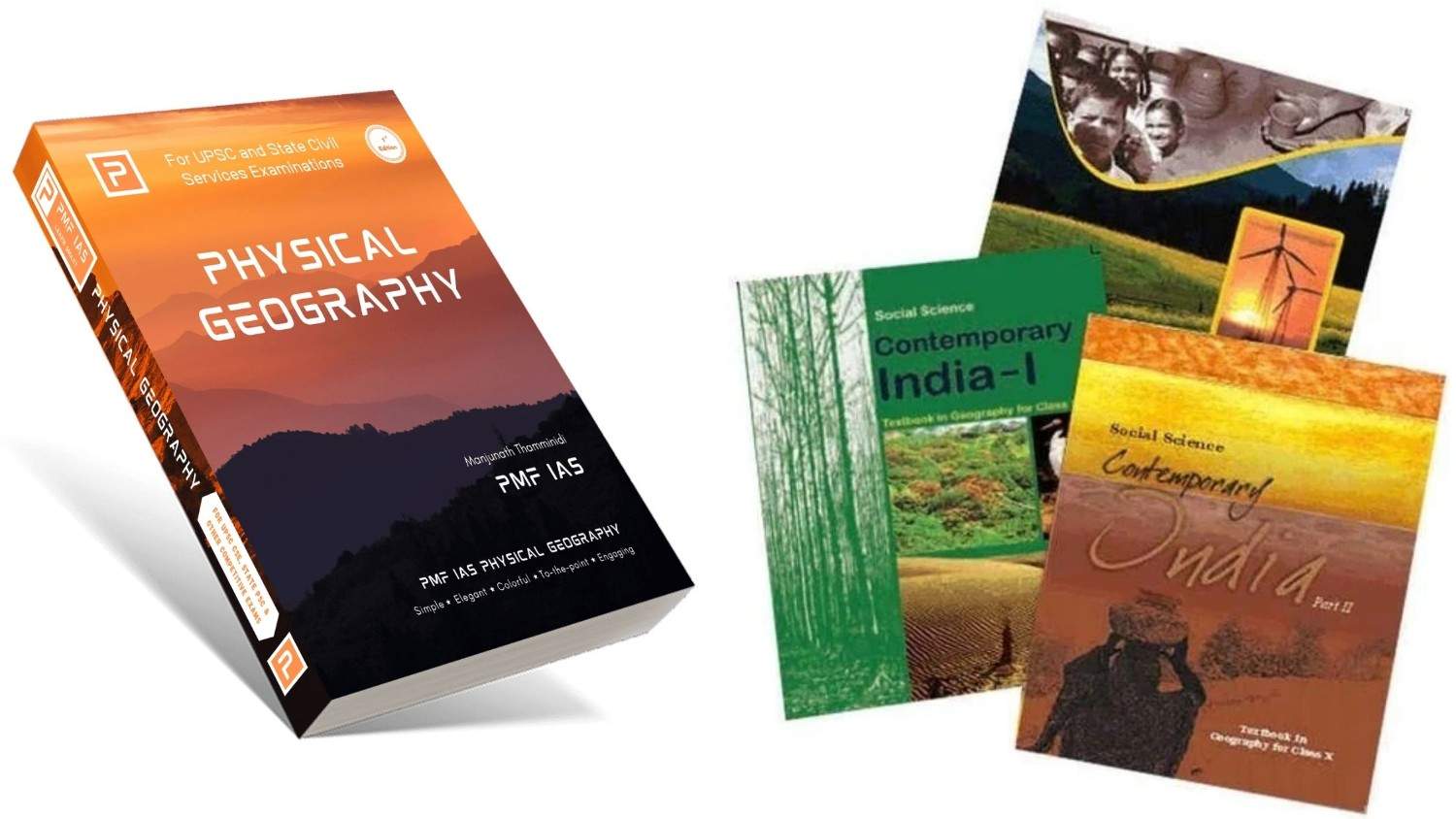
NCERT Geography Textbooks are the most recommended Geography Books For UPSC, forming the base for both Prelims and Mains.
Apart from NCERTs, there is a limited number of really important books. These include Certificate Physical and Human Geography by G.C. Leong and Geography of India by Majid Husain, which comprise all that you need to know for Prelims and Mains GS Paper 1.
There may be three or four other books in addition for Optional Geography.
Best Geography Books For UPSC
Ranking given below is in accordance with how often each book occurs on coaching institutes’ book lists, toppers’ interviews, and even in the syllabus of UPSC.
| Rank | Book | Author / Publisher | Best For |
|---|---|---|---|
| 1 | NCERT Geography Textbooks (Class 6-12) | NCERT | Foundation, all stages |
| 2 | Certificate Physical and Human Geography | Goh Cheng Leong | Physical geography, Prelims |
| 3 | Geography of India | Majid Husain | Indian geography, Mains GS-1 |
| 4 | School Atlas | Oxford / Orient Blackswan | Map-based questions, revision |
| 5 | Yellow Books: Indian & Physical Geography | Vajiram & Ravi | Quick revision before Prelims |
| 6 | Physical Geography | Savindra Singh | Geography optional only |
| 7 | India: A Comprehensive Geography | D.R. Khullar | Geography optional, regional planning |
Rank 6 & 7 apply only if Geography is selected as an optional subject and not just General Studies.
1. NCERT Geography Textbooks
Geography NCERT books are an absolute necessity for IAS preparation because you need the basic concepts before going into the advanced books such as G.C. Leong.
Students who neglect them find it difficult to understand the basics of the subject.
Since NCERT Geography books have been revised as per the NEP 2020 policy, it is necessary to study the updated versions.
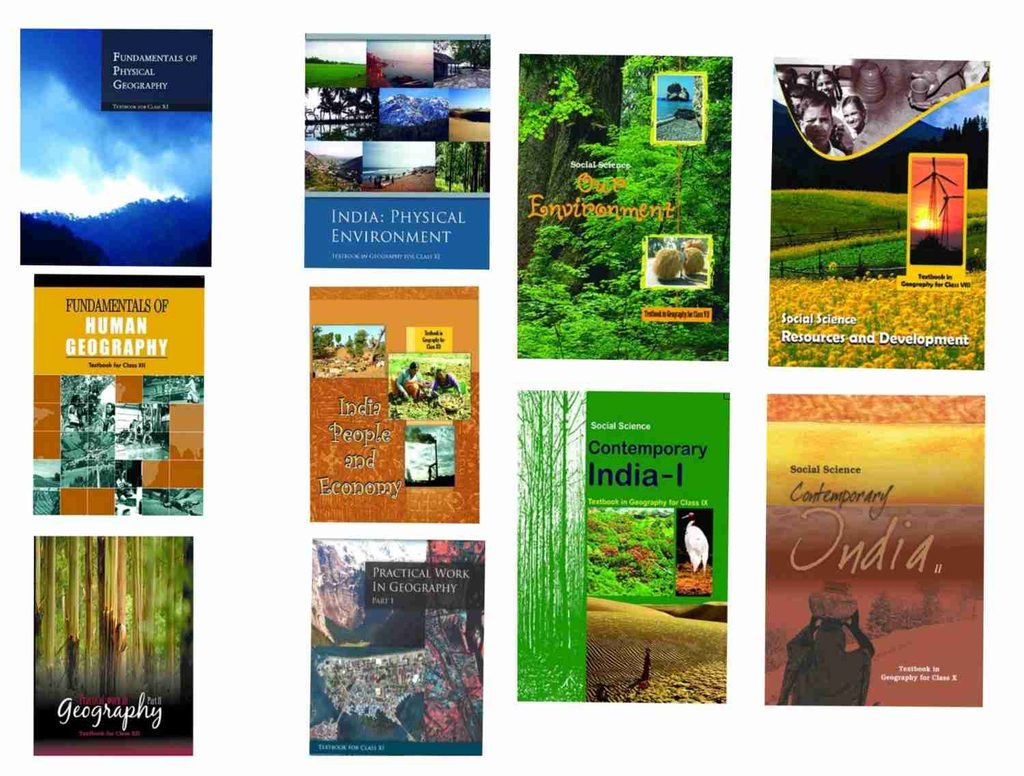
Although these books help in building a good base, they should be supplemented with reference books and current affairs.
2. Certificate Physical and Human Geography
This book, by G.C. Leong, makes complicated subjects such as Physical Geography and Climate and Landforms easy to understand with the use of illustrations.
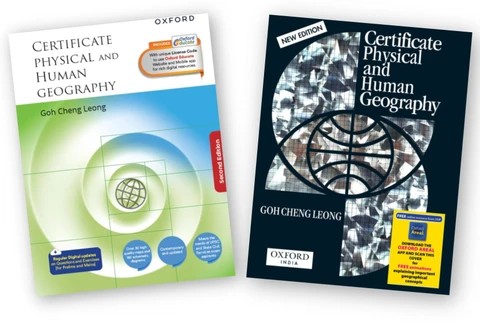
This book was written originally in 1984 for O-Level students, but became a favorite among UPSC aspirants because of its clear explanations.
Although this book has many good qualities, some examples and case studies mentioned here are old, and there is little emphasis on the geography of India.
3. Geography of India
The book by Majid Husain contains a comprehensive explanation of UPSC subjects like rivers, monsoons, agriculture, and industries. Updated versions ensure that information is up-to-date.
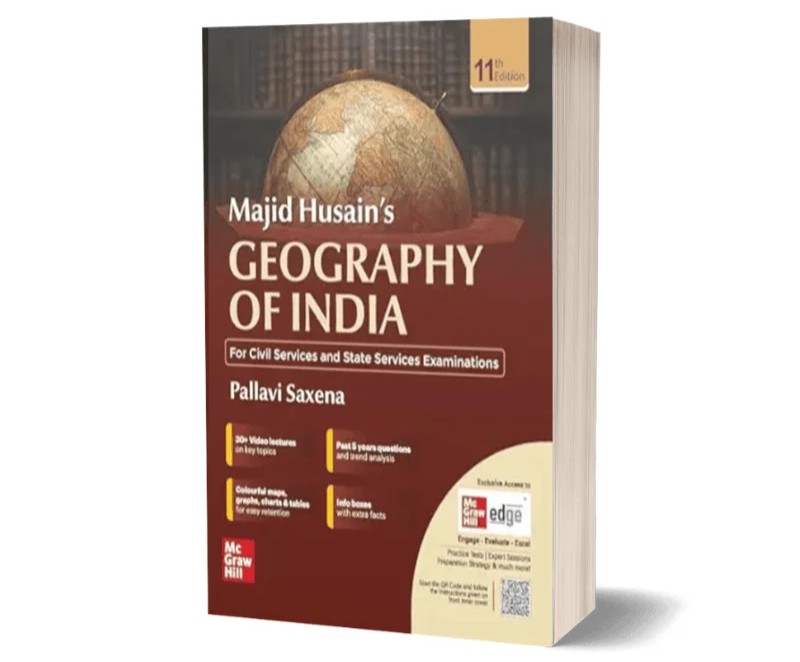
However, the huge size of this book makes it difficult for an aspirant to handle. Usually, most students refer to this book only once.
4. Oxford School Atlas
The Oxford School Atlas assists aspirants in developing good map sense. Hence, locating the places that often figure in UPSC can be made much easier by the same.
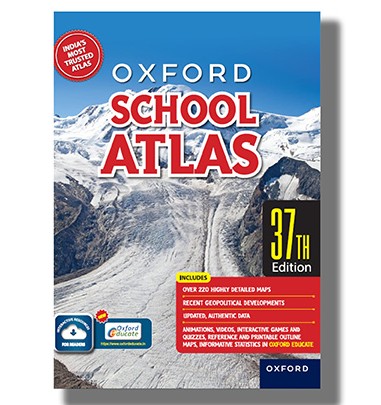
The importance of the atlas is not just in its use, but in its regular practice. Daily map practice along with current affairs can help boost the score in geography and prelims.
5. Vajiram & Ravi Yellow Books
The Vajiram & Ravi Yellow Books compile the essentials of the standard geography books into notes, diagrams, and flowcharts, thereby being the perfect choice for rapid revision for UPSC.
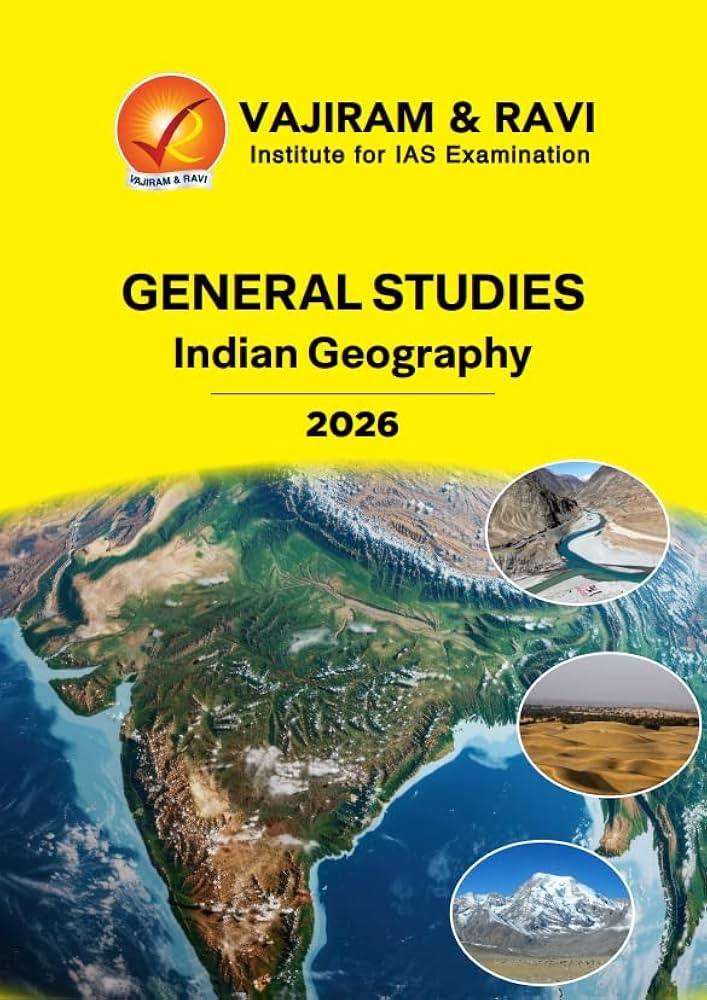
These notes are meant only for revision and not to be used as an introduction to concepts for the aspirants.
6. Physical Geography
Physical Geography by Savindra Singh is most recommended for UPSC Optional Geography students as it provides comprehensive information on subjects such as geomorphology and climatology.
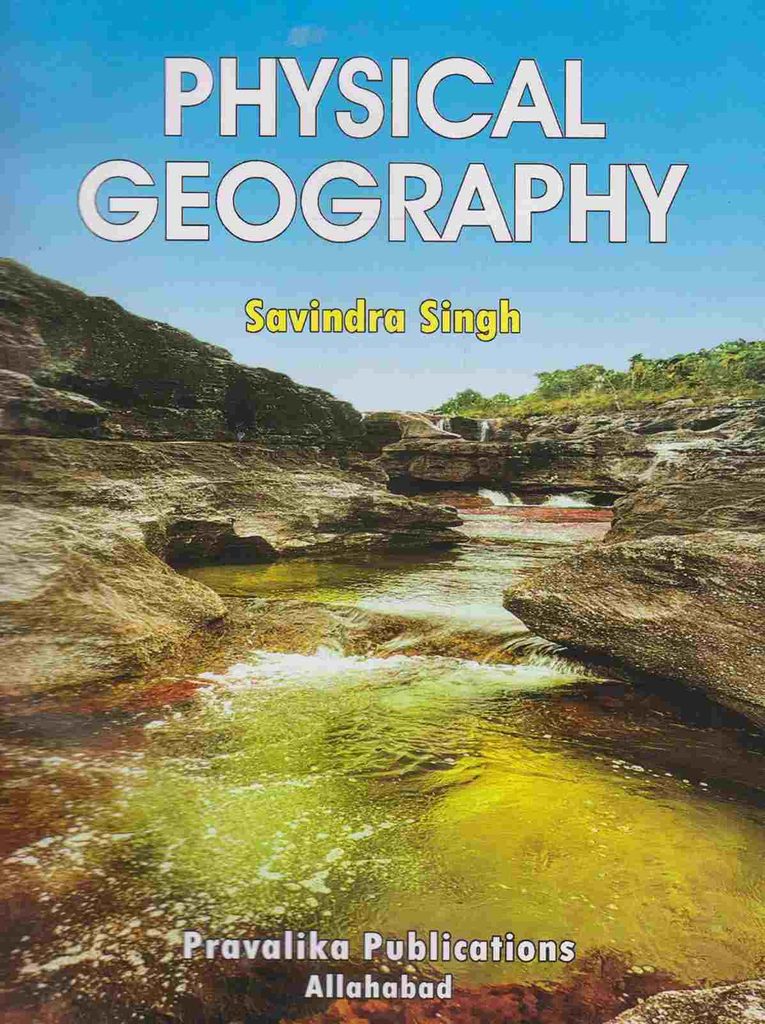
This makes it an appropriate book to study when one is looking to develop analytical skills for their optional subject.
However, for students preparing for the General Studies exam only, this book is too detailed.
7. India: A Comprehensive Geography
D.R. Khullar’s ‘India: A Comprehensive Geography’ is an important source of information for aspirants of Geography Optional, providing more details regarding regional planning and development than other GS-level texts. This book is frequently read together with Majid Husain.
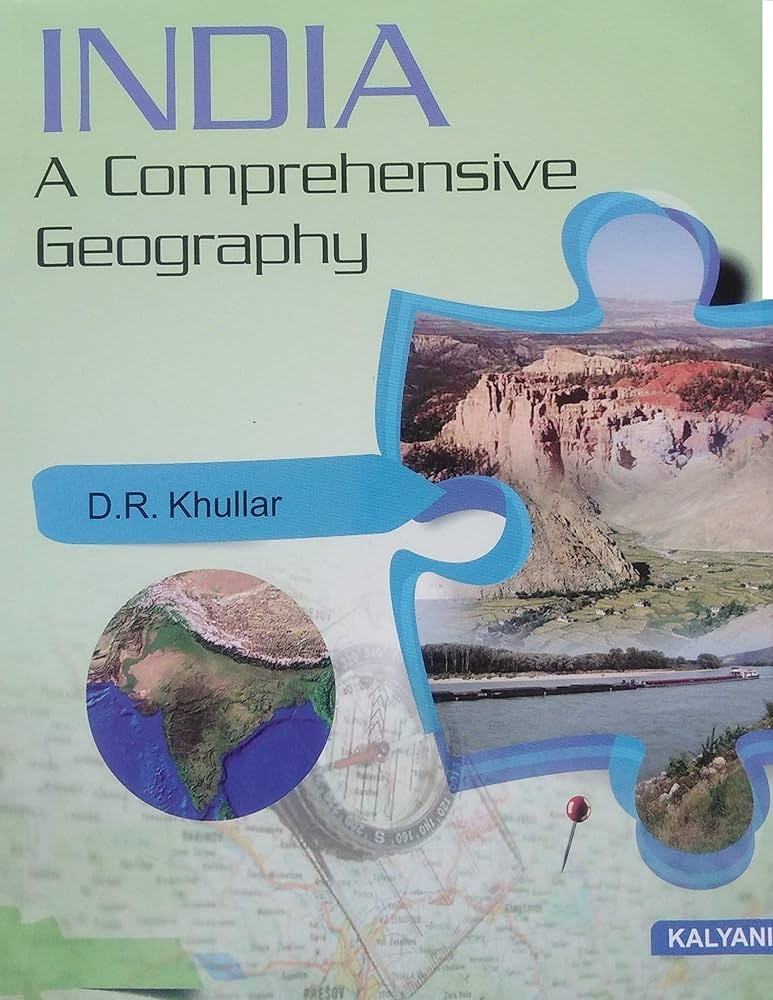
Due to its detailed nature, this book is not recommended for those who are concentrating solely on General Studies. This book should be read by candidates choosing Geography as an optional.
Geography Books For UPSC Prelims
Geography in Prelims is tested mostly through static facts, maps, and quick concept checks, so shorter and more visual books work best here.
| Book | Author / Publisher | Focus Area | Best For |
|---|---|---|---|
| NCERT Geography (Class VI to XII) | NCERT | Physical, human, Indian and world geography basics | First read, building the base |
| Certificate Physical and Human Geography | G.C. Leong, Oxford | Climate, landforms, oceans, world regions | Concept clarity with diagrams |
| Oxford School Atlas | Oxford University Press | Maps, locations, physical features | Map-based Prelims questions |
| Geography of India | Majid Husain, McGraw Hill | Physical, economic and social geography of India | India-specific Prelims and GS1 |
These four books, read together, cover almost every static geography question that has appeared in Prelims over the last decade.
Geography Books For UPSC Mains and Optional
Mains geography, especially for the optional subject, needs longer books with more depth, sharper diagrams, and a habit of linking static topics to current events.
| Book | Author / Publisher | Focus Area | Best For |
|---|---|---|---|
| Indian and World Geography | Majid Husain, McGraw Hill | India and world geography combined | GS Paper 1 answer writing |
| Physical Geography | Savindra Singh | Geomorphology, climatology, oceanography, biogeography | Geography optional Paper 1 |
| Certificate Physical and Human Geography | G.C. Leong, Oxford | Physical geography foundation | Optional Paper 1 basics |
| Down To Earth | Society for Environmental Communication | Environment, climate, disasters | Dynamic geography in Mains |
Candidates without Geography optional can skip Savindra Singh and rely on the first three books along with newspaper reading for GS Paper 1.
How to Study Geography For UPSC
Firstly, you must study NCERT Geography books to develop a strong foundation before advancing to other books, and also make it a habit to refer to the atlas to build your concepts related to maps and locations.
The second most important thing is that you must give priority to revising Physical Geography. This is because many concepts in the UPSC syllabus, such as Monsoon, Ocean Currents, and Winds, have roots in Physical Geography only.
Conclusion
The UPSC question papers of recent years are increasingly emphasizing practical geography. Thus, conceptual clarity and current affairs become more relevant than memorizing definitions.
Books like Majid Husain will continue to be highly respected for Mains preparation, whereas NCERTs will continue to be the necessary foundations.
A single book is certainly not enough for UPSC geography. An excellent foundation from NCERTs with standard references, an atlas, and current affairs would be the best approach.
FAQs
The basic books required for preparation for UPSC geography include NCERT Books (Classes 6 to 12), Certificate Physical and Human Geography by G.C. Leong, and a reliable Atlas, such as the Oxford School Atlas.
The most important Geography NCERT books for UPSC are the “new” ones from class 6 to 12. Among these, class 11 and 12 are the priority ones because they are part of the syllabus.
Four: the NCERT set, G.C. Leong, Geography of India, and an atlas. Anything beyond this adds revision load without adding marks.
No. It covers physical geography in depth but leaves out Indian geography almost entirely, so it must be paired with Majid Husain and the NCERTs.