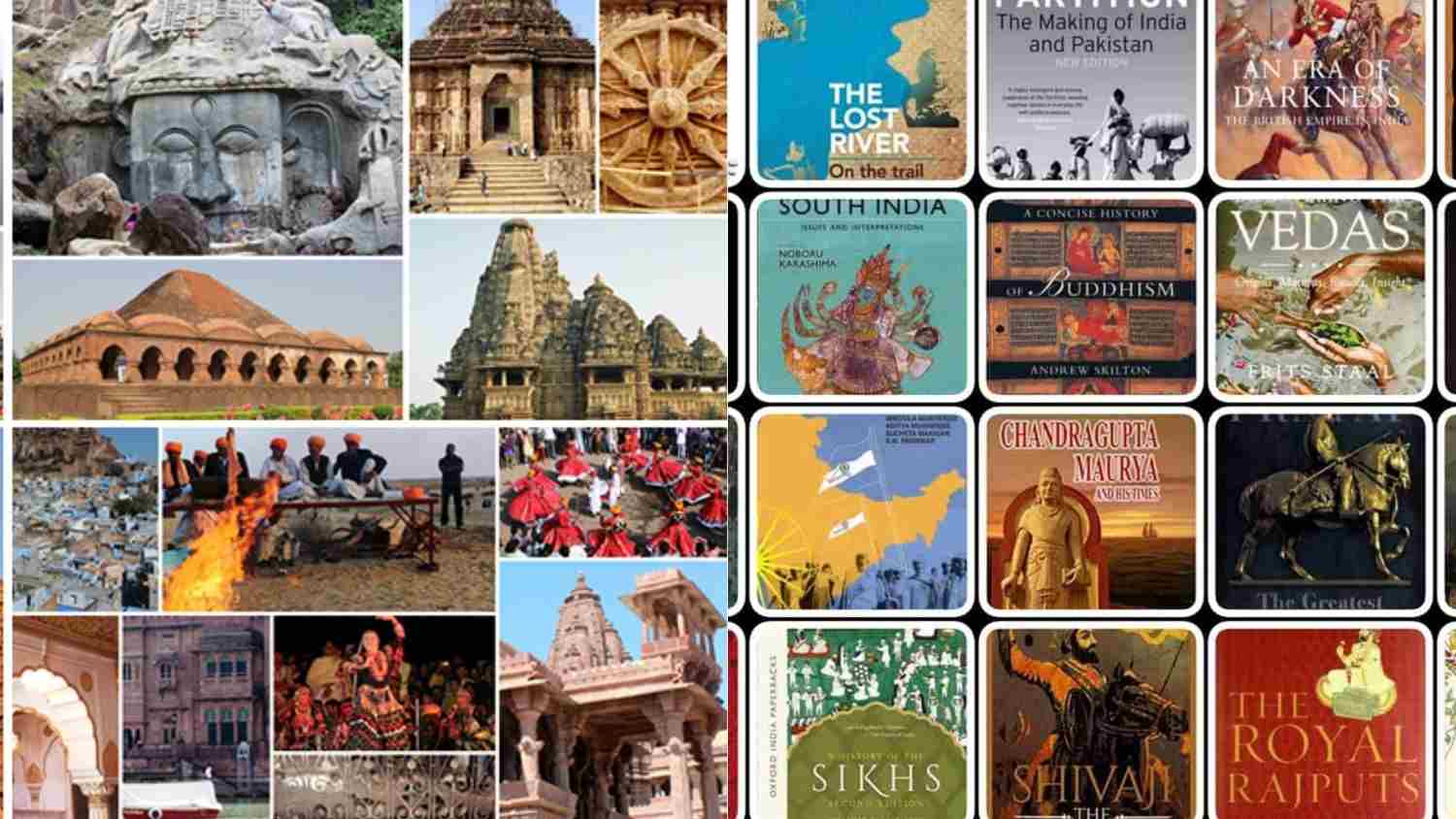
The NCERT history textbooks are the true beginning of the UPSC journey, while India’s Ancient Past by R.S. Sharma is undoubtedly the most recommended textbook for studying Ancient India.
Apart from this first choice, aspirants usually consult only a few other standard books on each of the periods.
Satish Chandra is the most renowned author on Medieval India, while Bipan Chandra and Rajiv Ahir’s Spectrum takes the lead in Modern India, and Norman Lowe dominates in World History.
Best History Books for UPSC
Here is the full list of recommended history books for UPSC Prelims and Mains, arranged by period.
| Period / Subject | Book | Author | Best For |
|---|---|---|---|
| NCERT History Set (Class 6–12) | Our Pasts I, II, III; Themes in Indian History I, II, III | NCERT (multiple historians) | Prelims + Mains |
| Ancient India | India’s Ancient Past | R.S. Sharma | Prelims + Mains |
| Ancient India | The Wonder That Was India | A.L. Basham | Prelims + Mains |
| Medieval India | Medieval India: From Sultanat to the Mughals | Satish Chandra | Prelims + Mains |
| Modern India | A Brief History of Modern India (Spectrum) | Rajiv Ahir | Prelims + Mains |
| Modern India | India’s Struggle for Independence | Bipan Chandra & others | Mains |
| Art and Culture | Indian Art and Culture | Nitin Singhania | Prelims + Mains |
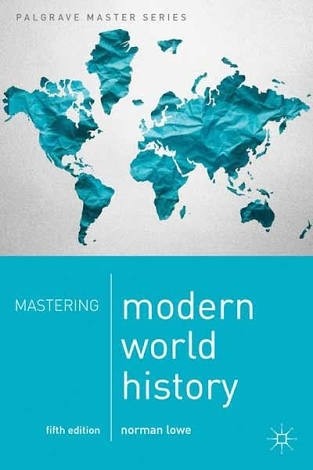
| World History | Mastering Modern World History | Norman Lowe | Mains |
| Post-Independence India | India Since Independence | Bipan Chandra, Mridula Mukherjee, Aditya Mukherjee | Mains |
History Book Dor UPSC
The importance of studying old NCERTs even after switching to advanced study material, the difference between the way Prelims and Mains reading must be done, and the area where most aspirants waste months.
NCERT Books For UPSC History
It is advisable to begin your studies with NCERT, as it forms the chronological narrative before delving into other sources.
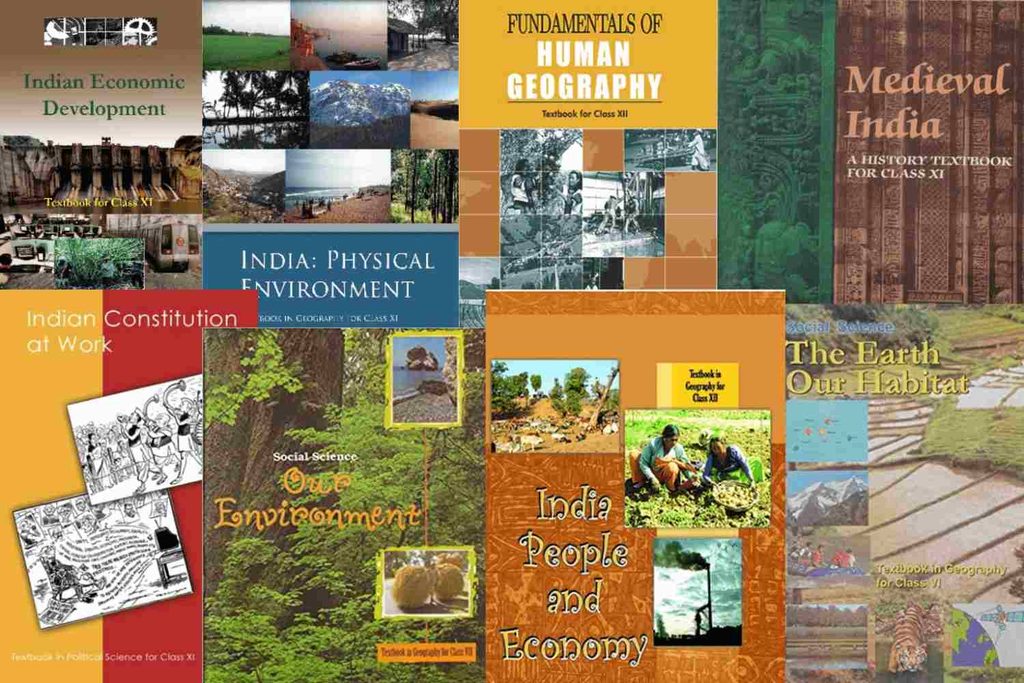
Our Pasts I & II are Class VI-VII textbooks on Ancient India, whereas Ancient India and Themes in Indian History Part I are Class XI & XII exam-focused textbooks respectively.
Ancient India was the old NCERT textbook written by R.S. Sharma, who later authored India’s Ancient Past. This chronology by Sharma is thus the standard chronology in all Indian history sources.
Ancient India Books for UPSC
India’s Ancient Past by R.S. Sharma is not a textbook but an argument for how society in India really changed.
He was the Head of the Department of History, University of Delhi, and later became the Chairman of the Indian Council of Historical Research.
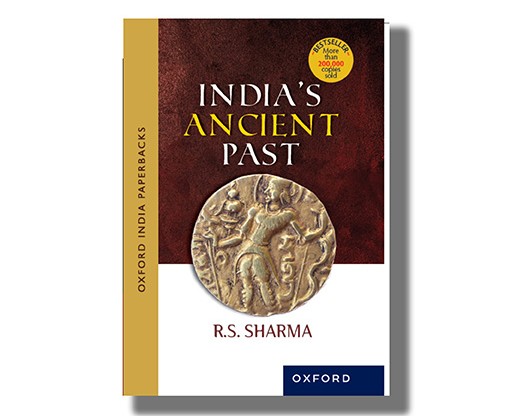
He specialized in the study of land relations and material culture rather than kings and wars, and that perspective is evident throughout the book.
The Indus Civilization, Vedic times, and the emergence of the Maurya and Gupta Empires are described as a part of one economic story rather than separate parts. This is precisely what Mains wants in his answer to continuity and change.
Medieval History Books for UPSC
Medieval History of India has been the standard reference book for this era for more than three decades now, as no other book has managed to explain the Mughal Administration so lucidly.
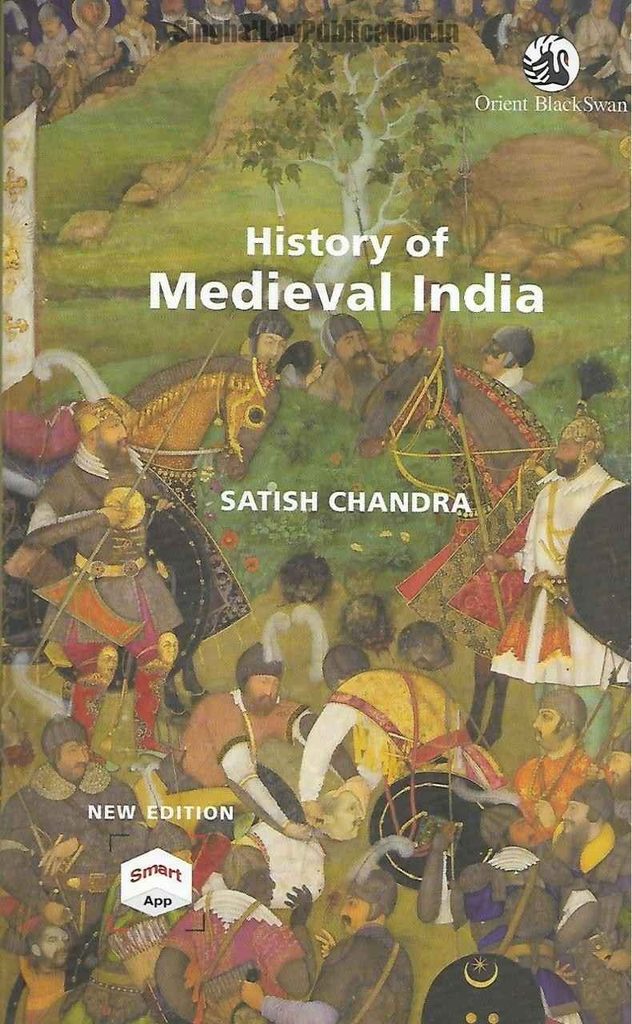
Satish Chandra was the chairman of the Indian Council of Historical Research and was an expert on the Mughal Agrarian and Political Systems. His study of the Mansabdari System of Akbar remains the one referred to by Mains answer writers.
Modern History Books for UPSC
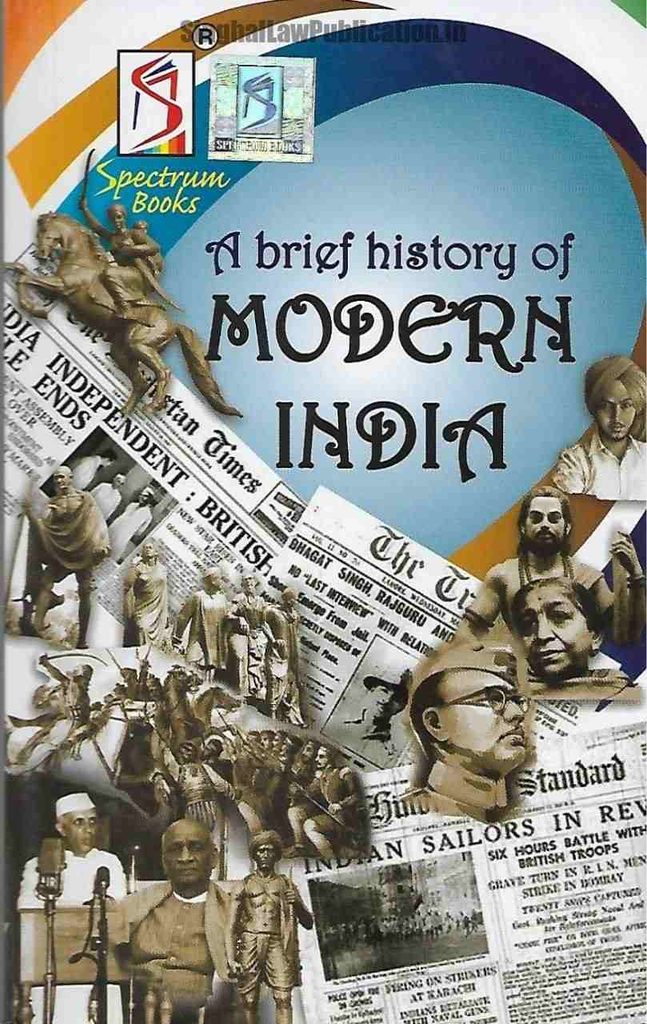
The book Spectrum by Rajiv Ahir is popular due to the methodical nature of the book, containing year-wise and Act-wise tables to revise Modern India fast and easily.
It is a book made specifically for competitive exams, and therefore, coaching institutes prescribe it as a primary source.
India’s National Movement has been discussed in much detail by Bipan Chandra in his books History of Modern India and India’s Struggle for Independence. He is a JNU historian and author of the NCERT Textbook on Modern India.
Indian Art and Culture Books for UPSC
Indian Art and Culture has helped transform this fragmented subject into a book that is easy to revise, and that is the reason why it has become a replacement for some photocopies that all aspirants used earlier to have in their shelves.
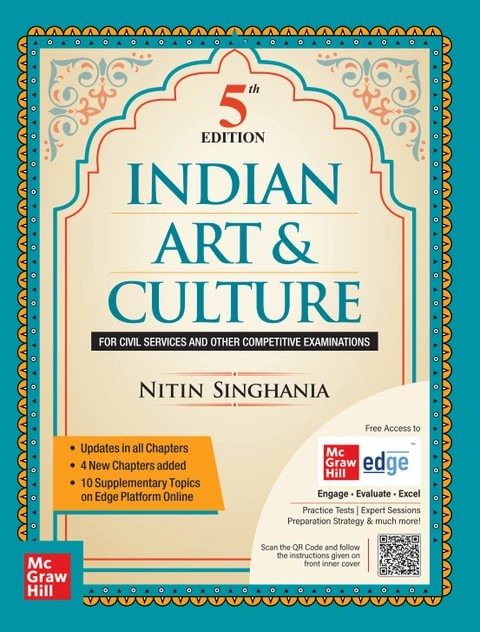
The author of this book, Nitin Singhania, himself is an IRS officer who has successfully passed his UPSC exams, and he wrote this book keeping in mind the areas which needed revision during his preparations.
This is why the chapter on classical dance and temple architecture resembles more like an exam revision note.
World History Books for UPSC
“Mastering Modern World History” by Norman Lowe distils the political evolution of two centuries into a simple cause-and-effect relationship.
Although this book is meant for A-Level students in the UK, its contents match the UPSC GS Paper 1 syllabus very well.
For better comprehension, most candidates also refer to Eric Hobsbawm’s “Age of Revolution” and “Age of Capital,” which are considered to be classic books on the history of Europe.
They are recommended for History optional students and not for General Studies candidates who have time constraints.
Post-Independence India
“India Since Independence,” authored by Bipan Chandra, Mridula Mukherjee, and Aditya Mukherjee, deals with India after independence starting from the year 1947 onwards.
It covers aspects such as integration of princely states, language reorganization, and economic policy.
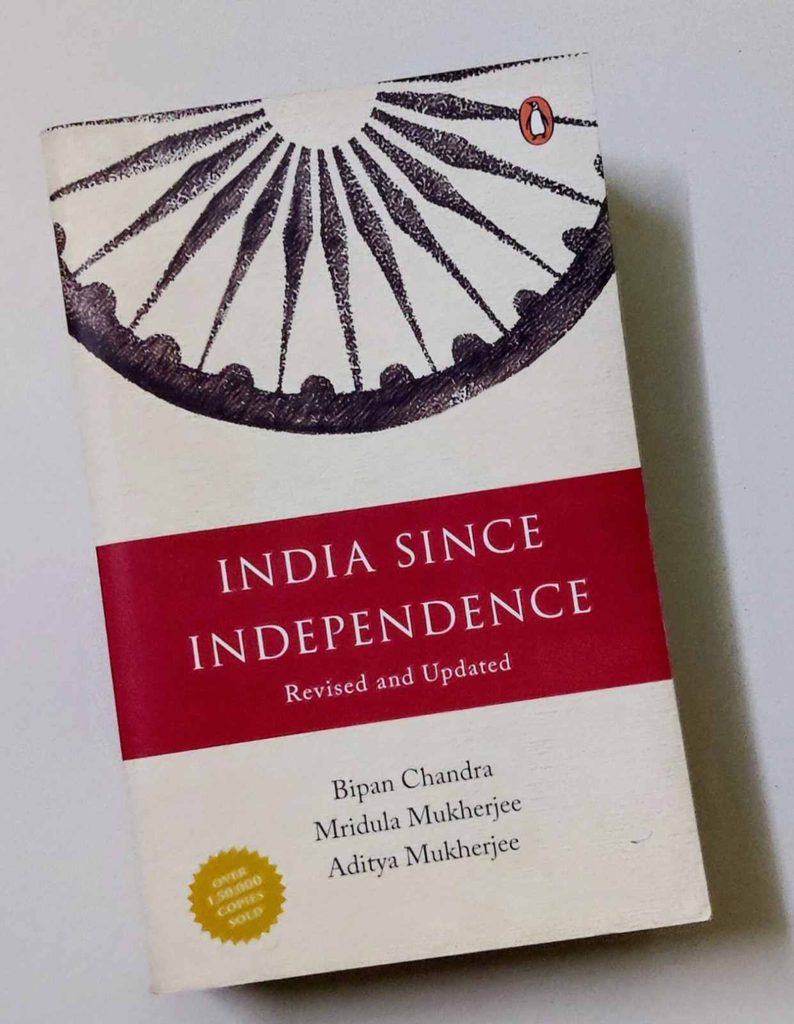
The book has been authored by prominent JNU historians and thus becomes a good follow-up of “India’s Struggle for Independence”.
There is a great deal of connection between the “Polity and Current Affairs” section and the subjects covered in this book, such as state reorganization, Sardar Patel, etc. Since the book has not been revised for quite some time, aspirants need to cover current affairs too.
History Optional Books for UPSC Mains
Reading the History optional syllabus requires something completely different. It rewards those candidates who can disagree with a particular historian’s interpretation.
- A New Look at Modern Indian History – B.L. Grover and Alka Mehta
- History of Medieval India – Satish Chandra
- History of Modern India – Bipan Chandra
- India’s Ancient Past – R.S. Sharma
- Contemporary World History (NCERT) – Arjun Dev
- Europe Since 1815 – Gordon A. Craig
- Europe Since 1870 – James Joll
- The Mainstream of Civilization – Strayer, Gatzke and Harbison
Conclusion:UPSC History Success Lies in NCERTs, Standard Books, and Repeated Revision
The calendar of UPSC tests necessitates starting early because the Prelims are scheduled on 24th May 2026 while the Mains will begin on 21st August 2026, providing very little time for preparation.
Successful candidates consistently demonstrate that thorough, repeated readings of a few standard baseline sources far outweigh scattered reading across redundant materials.
Almost all aspirants read NCERTs and Spectrum before Prelims and later concentrate on Satish Chandra, R.S. Sharma, and India Since Independence for Mains.
One cannot find the entire syllabus in one book because clearing the Prelims requires NCERTs and Spectrum, while good Mains answers are made from standard reference books.
FAQs
NCERT alone is not enough. It gives strong foundational knowledge, but Mains answers need the added analysis that standard reference books provide.
The best books for Indian history for the UPSC Prelims Exam are ‘A Brief History of Modern India’ by Spectrum (Rajiv Ahir) for Modern History.
Also, ‘India’s Ancient Past’ by R.S. Sharma for Ancient History, and ‘History of Medieval India’ by Satish Chandra for Medieval History.
Yes, you can skip world history for the UPSC Prelims because it is not part of the preliminary syllabus, but you cannot skip it entirely as it is a dedicated part of the UPSC Mains GS Paper 1 syllabus.
The time required to complete the History syllabus for the UPSC CSE Examination is 45-60 days, allocating 6-8 hours each day.
This would involve your initial read-through of the syllabus, which comprises Ancient India, Medieval India, Modern Indian History, Art & Culture, Post-Independence, and World History.