The IAS Prelims syllabus 2026 has two papers: GS Paper I, which counts toward your merit score, and GS Paper II (CSAT), which is qualifying.
Most aspirants waste months studying the wrong topics because they never read the official syllabus carefully.
This article covers the subject-wise syllabus, exam pattern for both papers, high-yield areas based on PYQ analysis, and a practical preparation strategy to help you clear Prelims on 24 May 2026.
UPSC Prelims Exam Pattern 2026 (GS Paper I & CSAT)
Here is the pattern of the UPSC Prelims Exam before you build your preparation schedule.
| Paper | Questions | Marks | Duration | Nature |
|---|---|---|---|---|
| GS Paper I | 100 | 200 | 2 Hours | Merit |
| GS Paper II (CSAT) | 80 | 200 | 2 Hours | Qualifying (33%) |
Source: Section II + Section III Notes, UPSC CSP 2026 Notification
GS Paper I decides your rank and your shot at Mains. Every correct answer adds directly to your merit score, so this paper deserves the bulk of your preparation time. CSAT only requires 33% to keep you in the race.
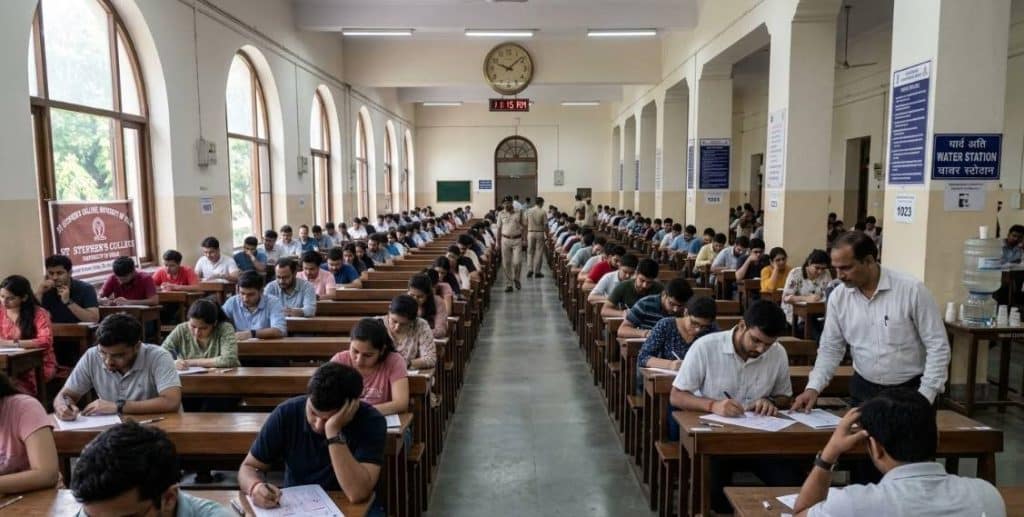
Both papers are MCQ-based, so candidates must attempt both. The exam runs in Hindi and English medium. Wrong answers carry a penalty of 0.66 marks in GS Paper I and 0.83 marks in CSAT. This is why one should not guess blindly.
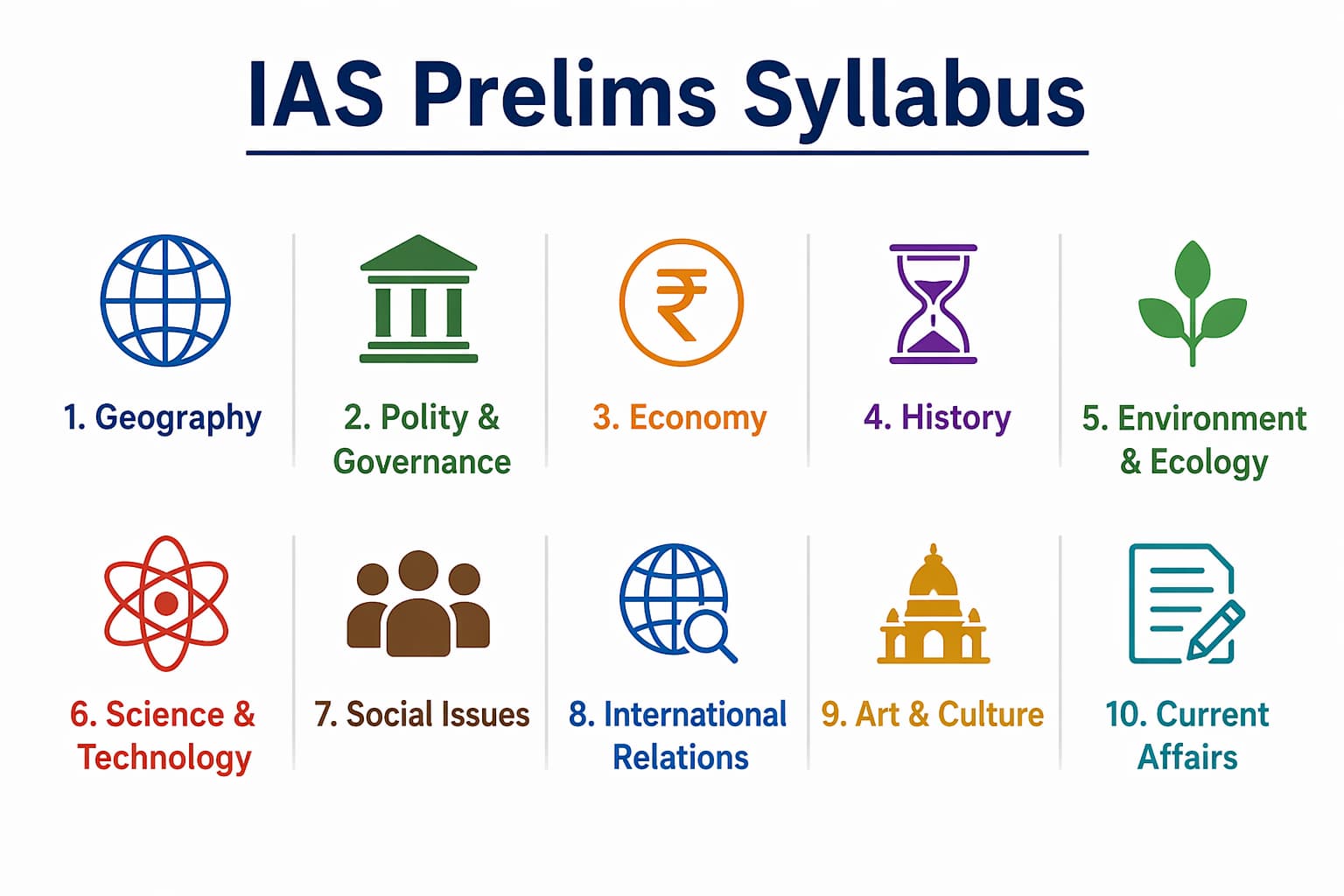
UPSC Prelims Syllabus 2026 Subject Wise (GS Paper I)
Here are the seven subjects that make up GS Paper I:
Current Affairs for UPSC Prelims
- Current events of national and international importance.
- Government schemes, programmes, and policy decisions in the news.
- International organisations, summits, and bilateral agreements.
- Awards, reports, indices, and rankings released by national and global bodies.
- Science, environment, and economic developments have been covered in the news over the past two years.
History Syllabus for IAS Prelims
- History of India and the Indian National Movement.
- Ancient India: major dynasties, administration systems, and cultural developments.
- Medieval India: Mughal administration, Bhakti and Sufi movements, and regional kingdoms.
- Modern India: freedom struggle, social reform movements, and key figures of the independence era.
- Post-independence consolidation, integration of princely states, and constitutional formation.
Geography Syllabus for UPSC Prelims
- Indian and World Geography.
- Physical, Social, and Economic Geography of India and the World.
- Geomorphology, climatology, oceanography, and natural disaster zones.
- Indian rivers, mountain ranges, soil types, and agricultural regions.
- World map-based questions on countries, seas, and international boundaries.
Polity Syllabus for IAS Prelims
- Indian Polity and Governance.
- Constitution, Political System, Panchayati Raj, Public Policy, Rights Issues.
- Fundamental Rights, Directive Principles, and Fundamental Duties.
- Parliament, Union, and State Executives, and the judiciary.
- Constitutional and non-constitutional bodies, elections, and Centre-State relations.
Economy Syllabus for IAS Prelims
- Economic and Social Development.
- Sustainable Development, Poverty, Inclusion, Demographics, Social Sector Initiatives.
- Monetary policy, inflation, the banking system, and the RBI functions.
- Fiscal policy, Union Budget concepts, taxation, and public debt.
- Economic surveys, government flagship schemes, and social sector programmes.
Environment Syllabus for UPSC Prelims
- General issues on Environmental Ecology, Biodiversity, and Climate Change.
- No subject specialisation required.
- Ecosystems, food chains, and conservation of biodiversity.
- National parks, wildlife sanctuaries, biosphere reserves, and wetlands.
- Climate change agreements, environmental laws, and pollution control policies.
Science Syllabus for IAS Prelims
- General Science.
- Basic concepts in Physics, Chemistry, and Biology at the Class X level.
- Space technology, ISRO missions, and defence-related science developments.
- Biotechnology, health, and disease-related current developments.
- Every day, science applications and recently launched national science programmes.
Start with NCERTs for each subject. Once you finish the base, layer in standard references. Then connect each subject to current affairs in the months before the exam.
UPSC CSAT Syllabus 2026 (GS Paper II Breakdown)
CSAT is not a subject you study. It is a skill you practise. As per the official notification, the paper has 80 questions at 2.5 marks each, totalling 200 marks.
- Comprehension: understanding written passages and extracting key information accurately.
- Interpersonal skills, including communication skills: reading tone, intent, and situational context.
- Logical reasoning and analytical ability: solving pattern-based and argument questions.
- Decision making and problem solving: applying reasoning to real-world situations.
- General mental ability: speed and accuracy across reasoning-based questions.
- Basic numeracy: arithmetic, percentages, and ratios at Class X level.
- Data interpretation: reading charts, graphs, tables, and data sets accurately.
- Qualifying paper: score a minimum of 33% (66 marks out of 200) to proceed to Mains.
- Objective-type questions throughout the paper.
Practise comprehension passages and reasoning sets regularly, and do not let CSAT preparation eat into your GS Paper I time.
Important Topics for IAS Prelims 2026 (Weightage & Strategy)
Not all topics carry equal weight. PYQ data from 2021 to 2025 shows clear patterns in which subjects the UPSC tests most. Use the table below to prioritise your preparation time.
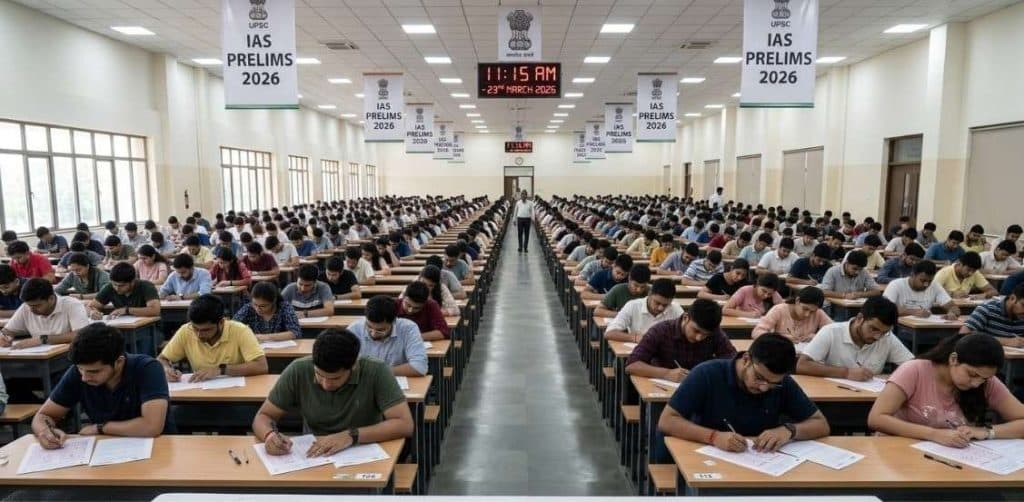
Here are the important topics based on PYQ analysis:
| Subject | High-Yield Areas |
|---|---|
| Polity | Constitution, Fundamental Rights, Parliament |
| Economy | Macroeconomic Indicators, Budget, Government Schemes |
| Environment | Climate Change, Biodiversity Agreements |
| History | Freedom Movement, Post-Independence Consolidation |
Polity, Economy, and Environment together account for roughly 60 to 70 questions in recent papers. Master these three first. Then cover History and Geography. Link every static topic to a recent current affairs development before the exam.
How to Cover UPSC Prelims Syllabus Effectively
Hours alone do not clear Prelims; instead, how you use those hours does. These four steps connect directly to the cutoff.
- Follow the official syllabus strictly: do not add topics from coaching notes, online lists, or any source outside the official notification.
- Revise every topic at least three times: one reading builds awareness; three rounds build the recall you need under exam pressure.
- Solve the last ten years of PYQs under timed conditions: do this weekly, not just in the final weeks before the exam.
- Attach every current affairs item to a static syllabus topic: isolated news reading does not convert into marks when it matters.
Mock tests show you exactly where your preparation stands. Review your score after every test. Fix the weak areas before they cost you marks on exam day.
Also Read:
Conclusion: The IAS Prelims Syllabus Covers Seven Subjects Across Two Papers
The IAS Prelims syllabus 2026 covers two papers. GS Paper I tests seven subjects: Current Affairs, History, Geography, Polity, Economy, Environment, and General Science.
Every mark in GS Paper I counts toward your merit. CSAT is qualifying at 33%, with 80 questions totalling 200 marks.
Study the official syllabus. Revise at least three times, solve PYQs regularly, and connect current affairs to static topics every week. Download the notification from upsc.gov.in today.
FAQs
Target Polity, Economy, and Environment first. These three subjects account for roughly 60 to 70 questions based on PYQ data from 2021 to 2025, giving you the highest return per hour of study.
Thousands of candidates clear Prelims each year through NCERTs, standard reference books, and consistent PYQ practice. Coaching helps, but it does not determine the result.
Guessing randomly, skipping revision cycles, and treating current affairs as a separate subject. With a penalty of 0.66 marks per wrong answer in GS Paper I, every incorrect attempt has a direct cost.
Three months work if you have a prior base. Focus on high-yield subjects, practise current affairs daily, and take two full-length mock tests every week without skipping the post-test review.