The best IAS books to start with are NCERT textbooks (Classes 6-12), followed by references like Laxmikanth for Polity and Spectrum for Modern History.
The UPSC syllabus is vast, and picking the wrong books costs months of effort. The exam runs in three stages: Prelims, Mains, and Interview, each demanding a different reading approach.
This article gives a subject-wise, stage-wise IAS books list to help you build preparation on a clear, reliable foundation. Check the full syllabus on the UPSC official website.
IAS Books List For Beginners – NCERT Foundation Books
Start with NCERTs. No exceptions. They build the conceptual base that every standard reference book assumes you already have, and most UPSC toppers treat them as the non-negotiable first step in preparation.
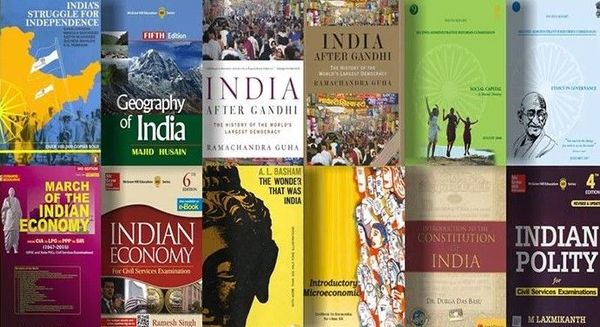
The table below shows which NCERT classes to cover per subject and what each set of books achieves:
| Subject | NCERT Classes | Purpose |
|---|---|---|
| History | 6-12 | Chronological understanding |
| Geography | 6-12 | Physical and human geography basics |
| Economics | 9-12 | Core economic concepts |
| Polity | 11-12 | Constitutional fundamentals |
All NCERT PDFs are freely available on the official NCERT website. Finish these before opening any reference book.
IAS Books List For Prelims and Mains (Standard UPSC Reference Books)
Every book in this section appears on most toppers’ reading lists. They cover the UPSC General Studies syllabus without padding, which is exactly why they work.
UPSC Civil Services Prelims 2026 is on 24th May 2026 (Sunday). Plan your reading schedule now so these books are completed and revised well before that date.
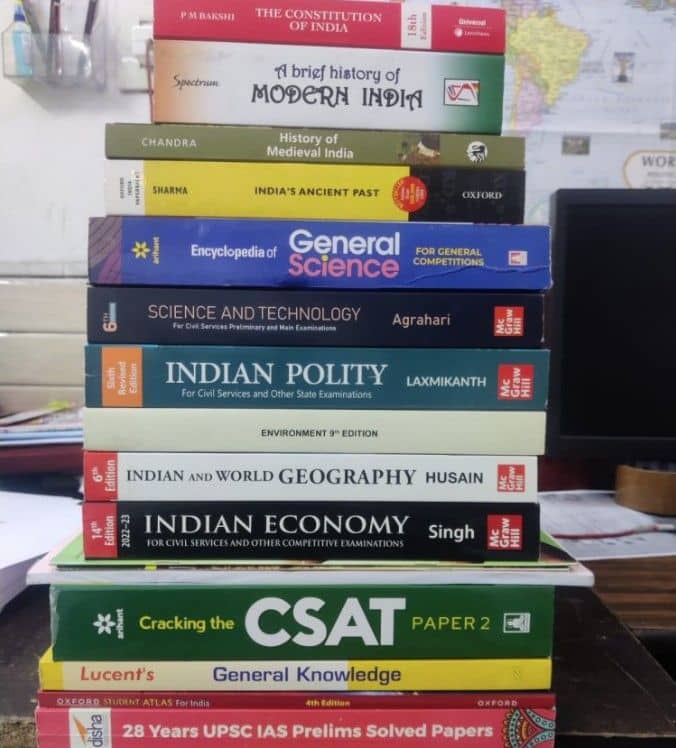
Here is the list of the most trusted reference books by subject:
| Subject | Book | Author |
|---|---|---|
| Polity | Indian Polity | M. Laxmikanth |
| Modern History | Spectrum Modern History | Rajiv Ahir |
| Economy | Indian Economy | Ramesh Singh |
| Geography | Certificate Physical Geography | G.C. Leong |
| Environment | Environment | Shankar IAS |
Each book maps to a specific General Studies paper in the UPSC syllabus. Cross-check every subject against the official syllabus PDF on upsc.gov.in before you begin reading.
IAS Books List For Current Affairs Preparation
Static books cover the foundation. Current affairs fill the gap between what you know and what the UPSC actually asks.
Both Prelims and Mains test current events directly, so this part of preparation needs daily attention, not last-minute cramming.
Key sources to follow:
- Daily newspaper reading to track national and international developments.
- Monthly current affairs compilations to consolidate and revise what you have read.
- Government reports and schemes for policy questions in Mains GS Papers 2 and 3.
Two sources cover most of what the UPSC tests:
- Press Information Bureau (PIB) for official government updates, scheme launches, and policy announcements.
- The Hindu for national, international, and editorial coverage.
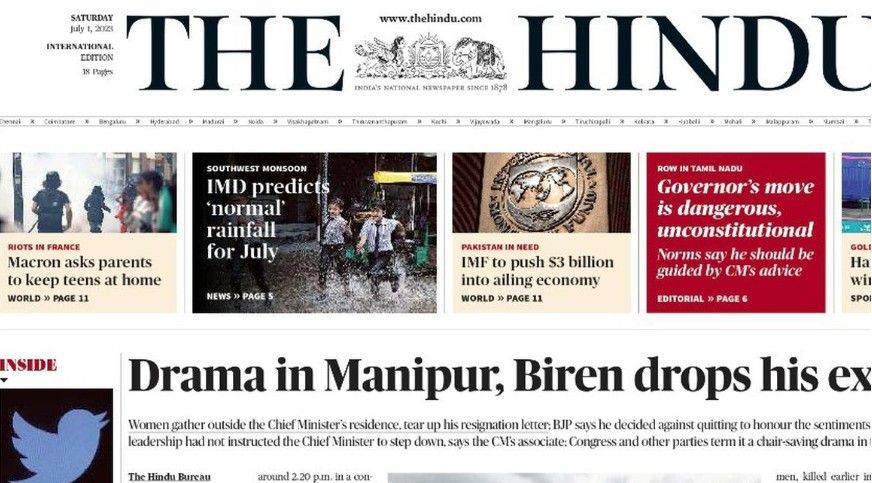
One newspaper, which is read with focus, beats three newspapers skimmed carelessly.
IAS Books List PDF (Free Download)
A downloadable IAS books list gives you a single reference point to plan, track, and adjust your reading throughout the year. Many aspirants print it and keep it visible during study hours.
- Maintain a subject-wise downloadable book list to monitor reading progress across all GS papers.
- Build a personal study checklist that maps each book to the specific syllabus topic it covers.
Always cross-verify your book list against the UPSC official syllabus page. Syllabus gaps are the most common and most avoidable reason for poor Prelims scores.
Recommended Books For IAS by Toppers
Always read less and revise more. That is the one principle every consistent UPSC topper follows.
- Toppers stick to a limited book strategy and avoid adding new sources close to the exam.
- The books that appear most often in topper interviews are: Laxmikanth (Polity), Spectrum (History), Ramesh Singh (Economy), G.C. Leong (Geography), and Shankar IAS (Environment).
- Adding more books creates overlap, slows revision, and splits focus without improving scores.
UPSC rewards depth, not breadth. Reading one book three times gives better results than reading three books once.
How To Use the IAS Books List Effectively
The right books mean nothing without the right method. How you read, revise, and practise determines your score, not the number of books you own.
- Open the UPSC syllabus before you open any book.
- Stick to one or two books per subject, maximum.
- Prioritise revision over picking up new reading material.
- Practise answer writing alongside your reading, not after.
- Use only the latest editions for the 2025-2026 exam cycle.
Most aspirants read too much and revise too little. Set a revision schedule from day one and treat it as seriously as the first read.
Conclusion: NCERTs, Laxmikanth & Spectrum Are The Most Reliable IAS Books
Choosing the right IAS books list is the first real decision in UPSC preparation. Start with NCERTs across History, Geography, Economics, and Polity.
Then move to standard references: Laxmikanth, Spectrum, Ramesh Singh, G.C. Leong, and Shankar IAS. Track current affairs daily through PIB and The Hindu.
Use only the latest editions, revise every book at least twice, and keep your source list short.
FAQs
M. Laxmikanth’s Indian Polity is the most referenced book for UPSC; pair it with NCERT textbooks (Classes 6-12) to cover the full General Studies foundation.
UPSC General Studies covers History, Geography, Polity, Economy, Environment, Science and Technology, Ethics, Essay, and subject areas across GS Papers 1 to 4, including Internal Security and Disaster Management.
Shakti Dubey secured AIR 1 in UPSC CSE 2024, with results declared on 22 April 2025. She is from Prayagraj, Uttar Pradesh, and cleared the exam in her fifth attempt.
Follow the UPSC syllabus strictly, read standard reference books, track daily current affairs through PIB and The Hindu, and practise answer writing regularly without depending on classroom coaching.