The present UPSC Chairman is Dr. Ajay Kumar, who has been appointed to this office from 14 May 2025 as the 37th Chairman of the Commission.
Fifteen chairmen have served less than a two-year term of office, while very few chairmen have had the complete term of six years, which is allowed by the Constitution.
Two chairmen of the Commission since 1926 have not served simultaneously; however, two chairmen have served the Commission initially on an interim basis, namely Arvind Saxena and Manoj Soni.
List of UPSC Chairmen (1926 to 2026)
The table below traces the office from the colonial-era Public Service Commission to today’s Union Public Service Commission.
| S. No. | UPSC Chairman | From | To |
|---|---|---|---|
| 1 | Sir Ross Barker | October 1926 | August 1932 |
| 2 | Sir David Petrie | August 1932 | 1936 |
| 3 | Sir Eyre Gordon | 1937 | 1942 |
| 4 | Sir F. W. Robertson | 1942 | 1947 |
| 5 | H. K. Kripalani | 1 April 1947 | 13 January 1949 |
| 6 | R. N. Banerjee | 14 January 1949 | 9 May 1955 |
| 7 | N. Govindarajan | 10 May 1955 | 9 December 1955 |
| 8 | V. S. Hejmadi | 10 December 1955 | 9 December 1961 |
| 9 | B. N. Jha | 11 December 1961 | 22 February 1967 |
| 10 | K. R. Damle | 18 April 1967 | 2 March 1971 |
| 11 | Ranadhir Chandra Sarma Sarkar | 11 May 1971 | 1 February 1973 |
| 12 | Akhlaqur Rahman Kidwai | 5 February 1973 | 4 February 1979 |
| 13 | M. L. Shahare | 16 February 1979 | 16 February 1985 |
| 14 | H. K. L. Capoor | 18 February 1985 | 5 March 1990 |
| 15 | J. P. Gupta | 5 March 1990 | 2 June 1992 |
| 16 | Rose Millian Bathew (Kharbuli) | 23 September 1992 | 23 August 1996 |
| 17 | S. J. S. Chhatwal | 23 August 1996 | 30 September 1996 |
| 18 | J. M. Qureshi | 30 September 1996 | 11 December 1998 |
| 19 | Surendra Nath | 11 December 1998 | 25 June 2002 |
| 20 | Purna Chandra Hota | 25 June 2002 | September 2003 |
| 21 | Mata Prasad | September 2003 | January 2005 |
| 22 | S. R. Hashim | 4 January 2005 | 1 April 2006 |
| 23 | Gurbachan Jagat | 1 April 2006 | 30 June 2007 |
| 24 | Subir Dutta | 30 June 2007 | 16 August 2008 |
| 25 | D. P. Agrawal | 16 August 2008 | August 2014 |
| 26 | Rajni Razdan | 16 August 2014 | 21 November 2014 |
| 27 | Deepak Gupta | 22 November 2014 | 20 September 2016 |
| 28 | Alka Sirohi | 21 September 2016 | 3 January 2017 |
| 29 | David R. Syiemlieh | 4 January 2017 | 21 January 2018 |
| 30 | Vinay Mittal | 22 January 2018 | 19 June 2018 |
| 31 | Arvind Saxena | 20 June 2018 | 6 August 2020 |
| 32 | Pradeep Kumar Joshi | 7 August 2020 | 4 April 2022 |
| 33 | Manoj Soni | 5 April 2022 | July 2024 |
| 34 | Preeti Sudan | 1 August 2024 | 29 April 2025 |
| 35 | Ajay Kumar | 14 May 2025 | October 2027 (incumbent) |
Who Is the UPSC Chairman of 2026?
The current Chairman of the UPSC is Dr. Ajay Kumar, who has been serving in this position since 14 May 2025 as the 37th Chairman of the Commission.
The officer is from the 1985 IAS batch, Kerala cadre. Dr. Kumar was the Defence Secretary of India from August 2019 till October 2022, and the position of the Chief of Defence Staff was created during his tenure in the ministry.
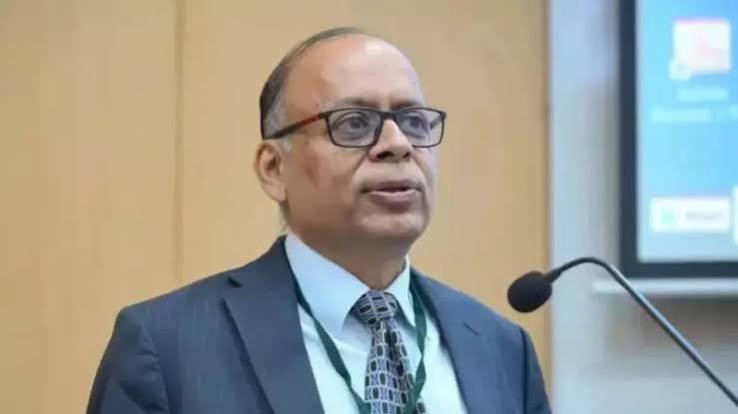
Dr. Ajay Kumar graduated from the Indian Institute of Technology (IIT), Kanpur, and went on to get a PhD in Business Administration from the University of Minnesota.
This selection is yet another case which the list above highlights. The government appoints the chairman from outside the UPSC. It means that the new chairman will have to acquaint himself with the internal workings of the Commission.
How Did the Commission Begin?
Ross Barker Sir headed the Public Service Commission from 1926, which, however, lacked any teeth during that period of time.
The recruitment formula of the Lee Commission of the 1920s was based on a blend of posts to be filled by British candidates, the Indians who were recruited directly, and those who were promoted to the post from provincial services.
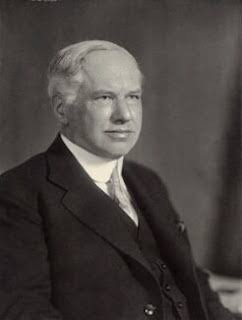
In 1935, the Government of India Act made this advisory board the Federal Public Service Commission with a clear legal status years before independence. After 1947, this board came to be called the Union Public Service Commission.
On 26 January 1950, the Constitution protected this body from being dissolved or curtailed by any future government by passing an ordinary law.
This is the reason why a UPSC chairman cannot just be sacked on an order from any minister as it was possible earlier. This has become necessary now for the President to take action in accordance with the Constitution.
Who Was the First Indian UPSC Chairman?
H. K. Kripalani took over just before India’s independence and therefore became the link between the Colonial Board and the present-day Commission.
He assumed office on 1 April 1947, four-and-a-half months before 15 August 1947. As his tenure ended in January 1949, he presided over the Commission in precisely those months when the administrative machinery of the country was reorganising itself after Partition.
![Union Public Service Commission [UPSC]](https://www.online-ias.com/wp-content/uploads/2026/09/Union-Public-Service-Commission.jpg "Union Public Service Commission [UPSC]")
All the chairmen who succeeded him have been citizens of India, and most of them have belonged to either the IAS or a similar all-India service. This tradition has been established by the appointment of H. K. Kripalani even before the Constitution secured the Commission in 1950.
His tenure was less than two years, shorter than the six-year period which is now the maximum allowed by the rules for such a term of office.
Who was the First Woman UPSC Chairman?
Rose Millian Bathew (Kharbuli) ended a 66-year gap in the leadership of the Commission when she was appointed in 1992.
She was in office from 23 September 1992 to 23 August 1996 for four years. No woman chairman before her, in all the sixteen chairmanships offered from the year 1926, had ever been appointed.
This was a period when very few women actually occupied the position of the head of the constitution-making body of India. Her appointment represented a change in attitude by the government towards appointing women as the chairman of the Commission.
After her tenure, only a few among the listed chairmen have been women.
How Is the UPSC Chairman Appointed and Removed?
Article 316 of the Constitution gives the President of India powers to nominate the chairman.
In case of a vacancy during the term, the President is authorized to appoint one among the members of the Commission temporarily until the time he makes a final appointment. This has happened to Arvind Saxena and Manoj Soni.
There is no provision for removal at the discretion of any minister in the Constitution. According to Article 317, the President has the power to remove the chairman for some definite reasons, like misbehaviour or insolvency, only after considering the matter in the Supreme Court.
This two-tier procedure of judicial inquiry followed by the presidential decision marks out the position of chairman from other positions within the government framework. It ensures the independence of the leadership from the government.
Tenure, Salary and Eligibility of the UPSC Chairman
The Constitution limits the term of office of the chairman to six years or until he turns 65 years old, whichever occurs earlier.
Once the chairman’s term ends, the government cannot reappoint him or appoint him to another government post. This provision prevents the chairman from making decisions based on his future prospects.
The annual salary of the chairman is fixed at 30 lakh rupees, which translates into 2.5 lakh rupees per month. The other members of the commission receive marginally lower pay of 2.25 lakh rupees per month. Before the seventh pay commission enhanced the salaries, the monthly pay of the chairman was a mere 90,000 rupees.
The Constitution does not prescribe any specific educational qualification. It only requires at least half of the members, including the chairman, to have served in a government post for ten years before their appointment.
Powers and Functions of the UPSC Chairman
According to Article 320, the government has to consider the views of the Commission regarding recruitments, with the chairman chairing the process.
The chairman examines recruiting persons into Group A and Group B service positions in the central government. It includes the examination for selecting IAS, IPS, and IFS officers.
Apart from conducting examinations, the chairman has the responsibility of considering cases for direct recruitments through interview, appointments through promotions and deputation, and disciplinary actions against civil servants.
In addition, the chairman will advise the government if the President refers any personnel matter to the Commission.
However, the members of the Commission undertake most of these functions collaboratively. What makes the role of the chairman more significant is his authority in giving priorities and making representations to the government on behalf of the Commission.
Current UPSC Members (2026)
The Commission currently has seven members alongside the chairman, three short of its full sanctioned strength.
| S. No. | Name | Service | Position |
|---|---|---|---|
| 1 | Preeti Sudan | IAS | Former Chairman, now Member |
| 2 | Lt. Gen. Raj Shukla (Retd.) | Indian Army | Member |
| 3 | Suman Sharma | IRS | Member |
| 4 | Bidyut Bihari Swain | IAS | Member |
| 5 | Sanjay Verma | IFS | Member |
| 6 | Dinesh Dasa | Academician | Member |
| 7 | Sheel Vardhan Singh | IPS | Member |
Conclusion: Dr. Ajay Kumar Is the Current UPSC Chairman
2026 will mark the centenary year of the Union Public Service Commission, when it was first headed by Sir Ross Barker as an advisory body. Through the course of time, this organization has grown and developed and become a constitutionally protected body.
Of all the leaders of this organization, the longest-serving one was D.P. Agrawal from 2008 to 2014. With the coming of the centenary year of the Commission under the guidance of Dr. Kumar, plans like the Center of Excellence show the commitment of the organization to enhance the examination process.
The history of this body shows that long-tenured leaders have helped sustain its reputation.
FAQs
Dr. Ajay Kumar is the current UPSC Chairman. He took charge on 14 May 2025 and is expected to serve through October 2027.
Sir Ross Barker led the original Public Service Commission from October 1926, before India’s independence.
The UPSC Chairman earns 30 lakh rupees a year, or 2.5 lakh rupees a month.
The President of India appoints the Chairman under Article 316, and can remove one only on specific grounds under Article 317, after a Supreme Court inquiry.