Becoming a Collector is a dream for many students, but the path is not as simple as applying for a government post.
A Collector is an IAS officer who reaches this position after clearing the UPSC Civil Services Exam and gaining administrative experience.
Whether you are after 10th, 12th, or graduation, this guide explains the exact journey, eligibility, preparation, and steps required to become a Collector in India.
Who Is a Collector and What Do They Actually Do?
A District Collector is the highest-ranking government officer in a district. They report directly to the state government.
But the title “Collector” is just one role an IAS officer gets posted to. You do not apply for the Collector post directly.
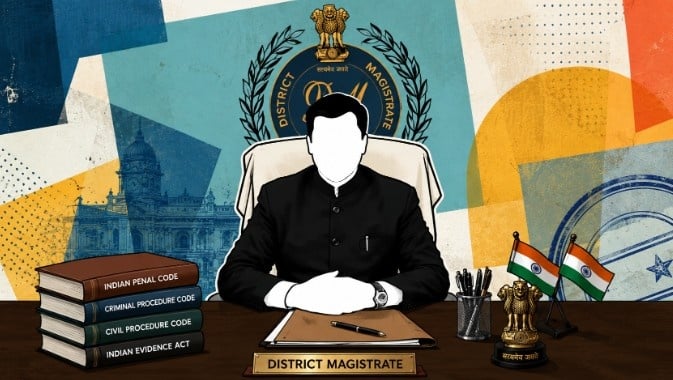
You clear the UPSC Civil Services Exam, get selected into the Indian Administrative Service (IAS), and after a few years of service, you get assigned as a District Collector.
The title also changes depending on the state. In some states, the same officer is called District Magistrate. In others, Deputy Commissioner. The responsibilities remain the same.
So what does a Collector do on a regular day?
They oversee law and order, manage revenue collection, supervise government welfare schemes, handle disaster relief, and even conduct elections in their district. One person, responsible for an entire district’s administration.
That is why this role carries so much weight and respect.
Can You Become a Collector Without UPSC?
There is no way to become a District Collector without clearing the UPSC Civil Services Examination. No shortcut exists. No state exam leads to this post.
Some people confuse the role with state-level administrative posts. State Public Service Commission exams can make you a Deputy Collector or a Tehsildar. But a full District Collector requires UPSC and IAS selection only.
Now, this does not mean state exams have no value. They are excellent career options. But they will not place you in the Collector’s chair.
How to Become a Collector After 10th: Start Planning Early
If you are a student who just finished 10th, you are already thinking ahead. That is a good sign.
You cannot appear for the UPSC exam right after 10th. You need a graduation degree first. But these years between 10th and graduation are not wasted time. They are preparation time.
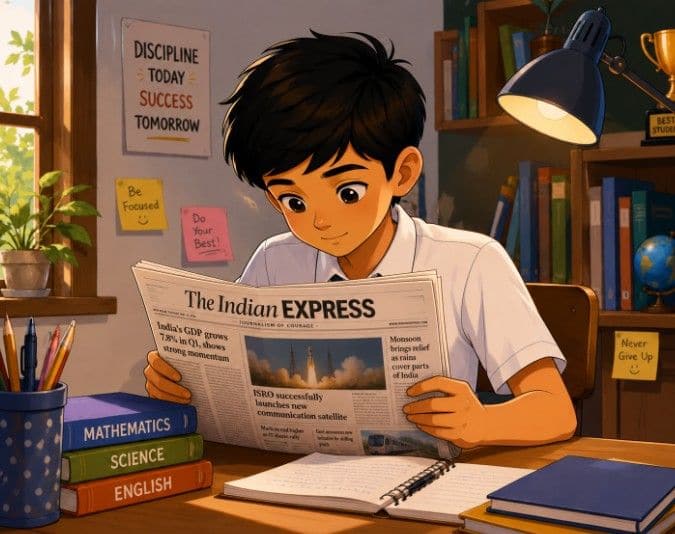
Here is what you should focus on:
- Pick any stream in 11th and 12th. Science, commerce, or arts. It genuinely does not matter for UPSC. Choose what interests you because you will study it for six more years, including college.
- Build a reading habit. Start with a newspaper. Read one national daily consistently. This single habit, started early, gives you a massive advantage later.
- Understand the country you live in. Watch Lok Sabha TV or Rajya Sabha TV debates. Read about the Indian Constitution in simple language. Stay curious about why things work the way they do.
You are not preparing for UPSC yet. You are building a foundation that will make preparation easier when the time comes.
How to Become a Collector After 12th: Your Stream Does Not Limit You
Whether you are wondering how to become a Collector after 12th science, commerce, or arts, the answer is the same. UPSC does not care about your 12th board stream. It does not care about your graduation subject either.
The only requirement is a bachelor’s degree from a recognized university. Any subject, college, or university.

So if you have just finished 12th, your next step is simple: enrol in a graduation program. Choose a subject that either interests you deeply or has overlap with the UPSC syllabus.
Subjects like Political Science, History, Geography, Sociology, and Public Administration have natural overlap. But engineering graduates, doctors, and commerce students have cracked UPSC too. Your degree opens the door. Your preparation decides the result.
Eligibility Criteria: Who Can Apply for UPSC Civil Services?
Before you start preparing, make sure you are eligible. Here are the three basic requirements.
Educational Qualification
You must hold a bachelor’s degree from a recognized university. Final-year students can also apply while awaiting results.
No minimum percentage is required. Whether you scored 50% or 90%, you are equally eligible.
Age Limit
Age is calculated as of 1st August of the year the exam is held.
| Category | Minimum Age | Maximum Age |
|---|---|---|
| General | 21 years | 32 years |
| OBC | 21 years | 35 years |
| SC/ST | 21 years | 37 years |
| PwBD (General) | 21 years | 42 years |
Number of Attempts
One common confusion: what counts as an “attempt”? If you appear for even one paper in the Preliminary exam, it counts. Simply filling the form and not showing up does not count.
| Category | Maximum Attempts |
|---|---|
| General | 6 |
| OBC | 9 |
| SC/ST | Unlimited (within age limit) |
Nationality
You must be an Indian citizen. Citizens of Nepal and Bhutan are also eligible, along with Tibetan refugees who came to India before 1962 and persons of Indian origin who have migrated from certain countries.
The UPSC Civil Services Exam: Three Stages Explained Simply
The UPSC exam is the only route to becoming a Collector. It has three stages, and each one filters out a huge number of candidates.
Let us break them down without making it sound like a government notification.
Stage 1: Preliminary Exam (Objective, Screening Round)
This is the first filter. Around 10 to 12 lakh candidates apply. Only about 10,000 to 12,000 clear Prelims.
You will face two papers, each of 200 marks:
| Paper | Subject | Nature |
|---|---|---|
| Paper 1 | General Studies | Counted for merit |
| Paper 2 | CSAT (Aptitude) | Qualifying only (need 33%) |
Paper 1 covers history, geography, polity, economy, environment, science, and current affairs. Paper 2 tests comprehension, logical reasoning, and basic maths.
The important thing to know: Prelims marks are not added to your final score. This round only decides whether you sit for the Mains exam.
Negative marking applies. Each wrong answer deducts one-third of the marks allotted to that question.
Stage 2: Mains Exam (Written, the Real Test)
This is where the exam actually begins. Mains is a written examination with 9 papers spread over 5 to 7 days.
| Paper | Subject | Marks |
|---|---|---|
| Paper A | Compulsory Indian Language | Qualifying |
| Paper B | English | Qualifying |
| Paper 1 | Essay | 250 |
| Paper 2 | General Studies I | 250 |
| Paper 3 | General Studies II | 250 |
| Paper 4 | General Studies III | 250 |
| Paper 5 | General Studies IV (Ethics) | 250 |
| Paper 6 | Optional Subject Paper 1 | 250 |
| Paper 7 | Optional Subject Paper 2 | 250 |
| Total (counted for merit) | 1750 |
The two language papers are qualifying. You need to score the minimum marks, and they will not affect your ranking.
The remaining seven papers carry 1750 marks. This is the score that decides your rank, along with the interview.
Your optional subject choice matters enormously here. It carries 500 marks out of 1750.
Stage 3: Personality Test (Interview)
About 2,000 to 2,500 candidates reach the interview stage. The interview carries 275 marks.
This is not a knowledge test. The board wants to understand how you think, how you respond under pressure, and whether you have the temperament for public service.

Common myths say you need to be extraordinarily confident or speak perfect English. That is not true. Candidates who answered in Hindi have scored higher than those who spoke fluent English. What matters is honesty, clarity, and a genuine understanding of the world around you.
Your final rank is based on Mains (1750) + Interview (275) = 2025 marks.
What Rank Do You Need to Actually Become a Collector?
To get into the IAS, you generally need a rank within the top 80 to 100 in the final merit list. This number shifts slightly every year based on vacancies.
But getting into the IAS does not make you a Collector overnight.
After selection, you go through training at the Lal Bahadur Shastri National Academy of Administration (LBSNAA) in Mussoorie. This training lasts about two years and includes a district attachment where you work under a serving Collector.
After training, your first independent posting is usually as a Sub-Divisional Magistrate (SDM). You handle a subdivision, not a full district.
After gaining experience for roughly 8 to 10 years, you are posted as a District Collector. Some officers get the posting earlier if vacancies open up.
So the honest timeline from exam to Collector’s office is roughly 9 to 12 years. This includes graduation, preparation, clearing the exam, training, and service.
| Stage | Approximate Duration |
|---|---|
| Graduation | 3 to 4 years |
| UPSC Preparation | 1 to 3 years |
| UPSC Exam Cycle | 1 year |
| LBSNAA Training | 2 years |
| Service before Collector posting | 5 to 8 years |
| Total (roughly) | 12 to 18 years from start |
Knowing this timeline is important. It keeps your expectations grounded and your motivation realistic.
A Preparation Strategy That Actually Works
You will find hundreds of “toppers’ strategies” online. The problem is that each one worked for that specific person. What you need is a framework you can adapt to your own life.
When Should You Start Preparing?
Most successful candidates spend 12 to 18 months in focused preparation. Some take longer, some manage in less. But 12 months of disciplined, daily study is a reasonable benchmark.
If you are in college, your final two years are ideal for building your foundation. Start reading NCERTs and newspapers. You do not need to join coaching immediately.
If you are a working professional, be honest about how many hours you can give daily. Even 4 to 5 focused hours, used well, can be enough if you are consistent over 14 to 16 months.
How to Choose Your Optional Subject
This decision can make or break your Mains performance. Here is a simple framework:
- Pick based on interest first. You will spend months studying this subject deeply. If you find it boring, your preparation will suffer.
- Check the scoring trend. Some optionals have historically higher average scores. Look at the last 5 years of toppers’ marks in each subject before deciding.
- Consider overlap with General Studies. Subjects like Geography, Political Science, and Sociology overlap with GS papers. This saves preparation time.
- Avoid copying someone else’s choice. Just because a topper chose Anthropology does not mean it suits you. Think independently.
A Realistic Study Plan (Phase-Wise)
Phase 1: Foundation Building (3 to 4 months)
Read NCERTs from Class 6 to 12 for History, Geography, Polity, Economics, and Science. These books are written in simple language and cover the basics better than any coaching material.
Start reading one newspaper daily. The Hindu or Indian Express are standard choices. Do not try to read both.
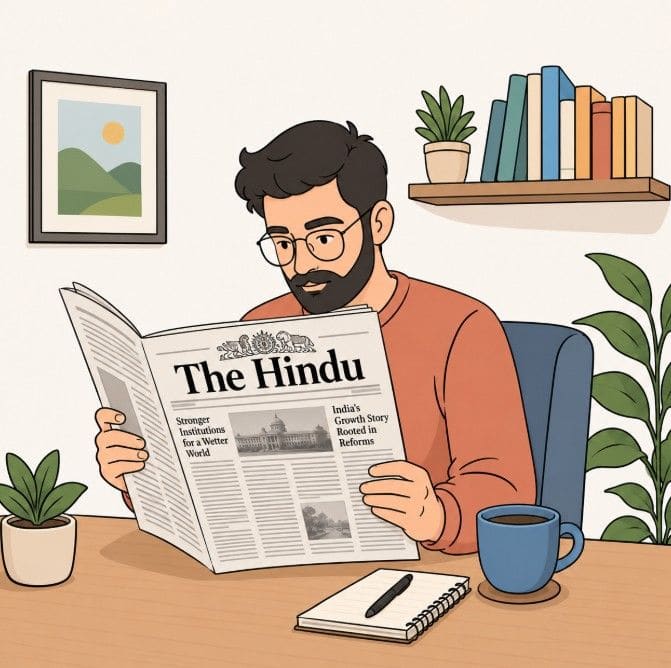
Subscribe to one monthly current affairs magazine. Yojana and Kurukshetra (government publications) are free and directly relevant.
Phase 2: Deep Study (4 to 5 months)
Move to standard reference books. Here are a few trusted ones:
| Subject | Book | Author |
|---|---|---|
| Indian Polity | Indian Polity | M. Laxmikanth |
| Modern History | India’s Struggle for Independence | Bipan Chandra |
| Geography | Certificate Physical and Human Geography | G.C. Leong |
| Economy | Indian Economy | Ramesh Singh |
| Ethics | Ethics, Integrity and Aptitude | Lexicon Publications |
Make short notes as you study. These notes are your revision material for the rest of your preparation. Do not copy from the book. Write in your own words.
Phase 3: Revision and Answer Writing (3 to 4 months)
This phase is where most candidates fail. Not because they lack knowledge, but because they never practised writing answers.
UPSC Mains is a writing exam. You can know everything and still score poorly if you cannot express it in a structured, time-bound answer.

Write at least one answer daily. Get it evaluated if possible. If not, compare it with model answers and be honest about the gaps.
Solve previous year question papers. Not just to practise, but to understand what UPSC actually asks. You will notice patterns that no coaching class explicitly teaches.
Resources: Keep It Minimal
The biggest mistake aspirants make is hoarding study material. More books do not mean better preparation. They mean more confusion.
Stick to NCERTs, one standard book per subject, one newspaper, and previous year papers. That is genuinely enough for most candidates.
Coaching vs. self-study: Coaching helps if you need structure, guidance, and a peer group. Self-study works if you are disciplined and can stick to a plan independently. Many toppers have used both approaches. Neither is superior. Choose what fits your temperament and budget.
Life After Selection: What a Collector’s Day Actually Looks Like
Most aspirants romanticise the post. Red beacon cars, saluting guards, and respect in society. That is all true. But it is a fraction of the picture.
A Collector’s day starts early and rarely ends on time. You manage crises you never anticipated. A flood, a communal tension, a farmer’s protest, a vaccination drive gone wrong.
You attend meetings with elected representatives who may or may not cooperate. Hundreds of files demand your attention. Village visits bring you closer to ground realities. Citizens share complaints that have been ignored by every other office.
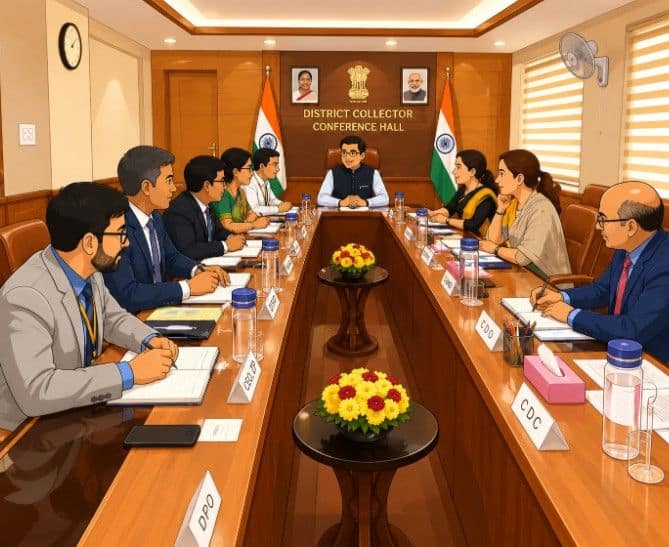
The power is real. But so is the pressure. Decisions you make on a Tuesday morning can affect thousands of families by evening.
If you are drawn to this role for the respect alone, think again. If you are drawn because you genuinely want to solve problems at scale, you will find it deeply fulfilling despite the exhaustion.
Salary and Benefits of a District Collector
Under the 7th Pay Commission, here is what an IAS officer earns at different stages:
| Level | Basic Pay (Monthly) | Stage |
|---|---|---|
| Level 10 | Rs 56,100 | Entry level (Junior Scale) |
| Level 11 | Rs 67,700 | Senior Time Scale |
| Level 12 | Rs 78,800 | Junior Administrative Grade |
| Level 13 | Rs 1,18,500 | Selection Grade |
| Level 14 | Rs 1,44,200 | Super Time Scale |
A serving District Collector typically falls in Level 12 or 13, depending on their years of service.
Beyond salary, the perks include a government bungalow, official vehicle, security personnel, household staff, and medical facilities. The total value of these benefits often exceeds the salary itself.
Career growth continues well beyond the Collector’s post. Senior IAS officers go on to serve as Divisional Commissioners, Principal Secretaries, Chief Secretaries, and even Cabinet Secretaries at the central level.
Common Mistakes That Hold Aspirants Back
After understanding how to become a Collector in India, many candidates still struggle. Not because the exam is impossible, but because of avoidable mistakes.
- Starting without understanding the exam. Many candidates begin studying random topics without reading the UPSC syllabus even once. Read the syllabus first. Everything starts there.
- Collecting too many books. Having 12 books on Indian History does not help. Finishing one thoroughly does. Buy less. Read more.
- Ignoring answer writing. You can read for two years and still score below average if you never practised writing. Start early. Write regularly.
- Skipping mock tests. Prelims is an exam of elimination. Without regular mock tests, you will not develop the speed and accuracy needed to survive this round.
- Comparing yourself with toppers online. Social media shows you highlight reels. It does not show you the months of doubt, failed attempts, and sleepless nights those same toppers went through. Run your own race.
- Quitting after one attempt. Most successful candidates did not clear the exam on their first try. If your approach was right but your score fell short, refine your strategy and try again.
Conclusion: Clear UPSC, Join the IAS, Serve as Collector
Becoming a District Collector is not about being born gifted. It is about years of steady, focused effort. The exam is tough, the preparation is long, and the wait can test your patience.
But thousands of ordinary students from small towns, government schools, and modest backgrounds have done it. If you prepare with discipline and clarity, there is no reason you cannot. Start today, and give yourself a real chance.
FAQs
Yes. Many toppers, including some rank holders, have prepared entirely through self-study. Coaching provides structure, but it is not mandatory. If you can follow a disciplined plan and use the right resources, self-study works perfectly well.
No. There is no separate exam or recruitment for the Collector post. You must clear the UPSC Civil Services Exam and get allocated to the IAS cadre.
After clearing the exam, you undergo about 2 years of training. Then you serve as an SDM for a few years. Most officers get their first Collector posting after 7 to 10 years of total service.
State PCS officers can get promoted to the IAS cadre through a process that typically takes 15 to 20 years of service. After that promotion, they can be posted as Collectors. However, this route is significantly longer.
No. UPSC Civil Services does not have any physical or height requirement. This is an administrative service, not a uniformed force.
You cannot appear for the exam until you hold a graduation degree. But you can absolutely begin building your foundation after 10th or 12th. Start reading newspapers, understanding current affairs, and exploring subjects that interest you.