Only five Indian citizens have ever won a Nobel Prize. Not nine. Not twelve. Five.
The other names you see floating around on Google- Naipaul, Chandrasekhar, Khorana- are Indian by birth or heritage, but they held foreign passports when the Nobel committee called.
This mix-up is why so many lists of Nobel Prize winners in India contradict each other. This article clears that up and will give you the full picture.
What Is the Nobel Prize? (Quick Context)
The Nobel Prize has been awarded since 1901. It covers six fields: Physics, Chemistry, Medicine, Literature, Peace, and Economics.
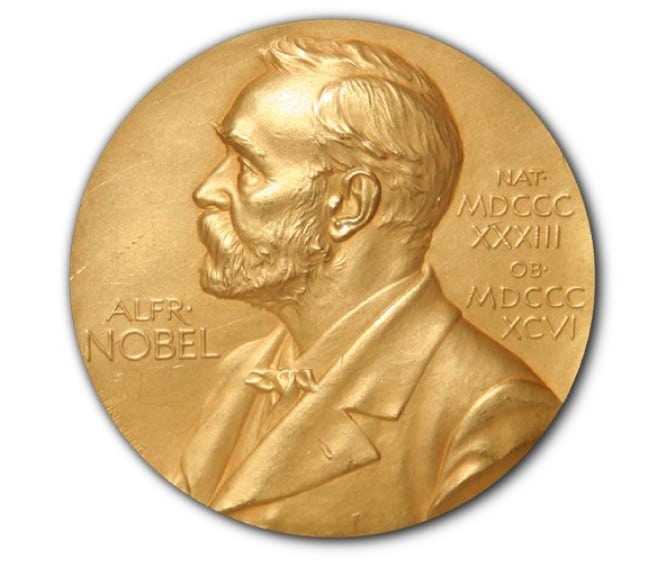
It rewards work that has changed how the world thinks, heals, or lives. Alfred Nobel set it up through his will in 1895.
How Many Nobel Prize Winners Are There From India?
The honest answer depends on how you count.
Indian Citizens Who Won the Nobel Prize
Five people held Indian citizenship at the exact moment they won. That’s the strictest, most accurate count.
People of Indian Origin Who Won as Foreign Citizens
Four more were born in India but had switched citizenship by the time they won. One more, Naipaul, has Indian roots but was born abroad.
Here’s how that breaks down:
| Group | Count | Names |
|---|---|---|
| Indian citizens at time of award | 5 | Tagore, Raman, Mother Teresa, Sen, Satyarthi |
| Born in India, later foreign citizens | 4 | Khorana, Chandrasekhar, Ramakrishnan, Banerjee |
| Indian heritage, born outside India | 1 | V. S. Naipaul |
Complete List of Nobel Prize Winners in India
Here is the full list, citizens and Indian-origin laureates together, in one place.
| Year | Laureate | Category | Notes |
|---|---|---|---|
| 1913 | Rabindranath Tagore | Literature | First Indian and first non-European Nobel laureate, for Gitanjali |
| 1930 | C. V. Raman | Physics | For discovery of the Raman Effect (light scattering) |
| 1968 | Har Gobind Khorana | Physiology or Medicine | Shared prize for interpreting the genetic code (US citizen at the time) |
| 1979 | Mother Teresa | Peace | For humanitarian work with the poor in Kolkata |
| 1983 | Subrahmanyan Chandrasekhar | Physics | Indian-born, US citizen; for work on stellar structure and evolution |
| 1998 | Amartya Sen | Economics | For contributions to welfare economics |
| 2001 | V. S. Naipaul | Literature | Of Indian heritage, born in Trinidad |
| 2009 | Venkatraman Ramakrishnan | Chemistry | Indian-born, British/US citizen; for studies on ribosome structure |
| 2014 | Kailash Satyarthi | Peace | Shared with Malala Yousafzai, for work against child labor |
| 2019 | Abhijit Banerjee | Economics | Indian-American economist, for experimental approach to alleviating poverty |
First Indian Nobel Laureate: Rabindranath Tagore
Tagore won in 1913 for Gitanjali, a collection of poems soaked in devotion and quiet emotion.
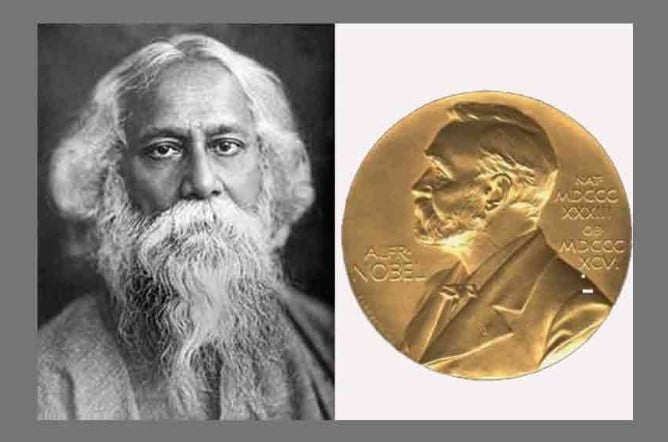
He translated it into English himself. That single act put Indian literature in front of Western readers for the first time.
He remains the only Indian to win a Nobel Prize for work written in an Indian language.
Most Recent Indian Nobel Laureate
Abhijit Banerjee won the Economics prize in 2019. He shared it with Esther Duflo and Michael Kremer.
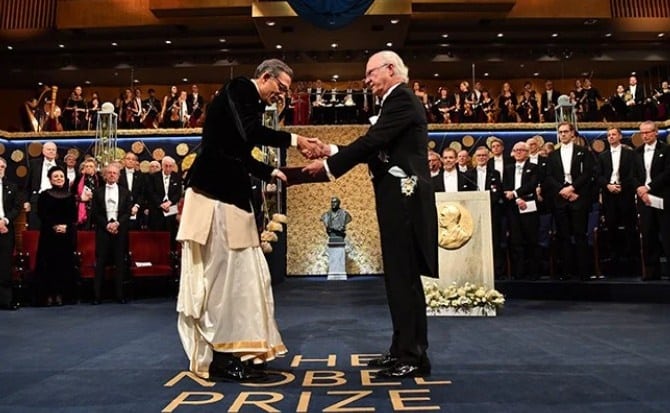
Their work used small, real-world experiments to test what actually reduces poverty, not just theories about it.
He remains the latest name added to the list of Nobel Prize winners from India, six years and counting.
Interesting Facts About Indian Nobel Laureates
The table below presents some interesting facts about the Indian Nobel Prize Winners.
| Fact | Laureate |
|---|---|
| Only Indian citizen to win a science Nobel | C. V. Raman |
| Nephew of a previous Indian laureate | Subrahmanyan Chandrasekhar (C. V. Raman’s nephew) |
| Shared the Peace Prize with Malala Yousafzai | Kailash Satyarthi |
| First woman linked to an Indian Nobel win | Mother Teresa |
| Only Nobel for work in an Indian language | Rabindranath Tagore |
Why Does India Have So Few Nobel Laureates?
This is the question everyone eventually asks after seeing the list. It deserves a real answer.
Research funding in India has historically lagged behind countries like the US, UK, and Germany. Fewer resources mean fewer breakthroughs at the highest level.
Many of India’s most accomplished scientists left the country to work abroad. Chandrasekhar, Khorana, and Ramakrishnan all built their Nobel-winning work overseas.
This isn’t a talent problem. It’s an infrastructure and opportunity problem, and the data backs that up.
India has also leaned toward applied research and engineering over the kind of long-term, high-risk basic research that Nobel committees tend to reward.
That’s slowly changing, but it explains the current gap.
More Suggested Topics:
Conclusion: India Has Produced Ten Nobel Laureates, Five as Citizens, Five by Origin
India has produced Nobel prize winners across literature, science, peace, and economics, but the exact number depends on how you define Indian.
Five citizens won it outright. Five more carry Indian roots but different passports. Together, they show a country whose talent often needs to travel abroad to be fully recognized on the world’s biggest stage.
FAQs
Rabindranath Tagore became the first Indian Nobel Prize winner in 1913, receiving the Nobel Prize in Literature for his poetic masterpiece Gitanjali.
India has five Nobel laureates if counting only Indian citizens. The number becomes ten when including Indian-born and Indian-origin laureates with foreign citizenship.
Amartya Sen won the Nobel Memorial Prize in Economic Sciences in 1998, followed by Abhijit Banerjee in 2019 for outstanding contributions to economics.
No. No Indian or Indian-origin Nobel laureate has won the Nobel Prize more than once. Every laureate associated with India has received only one Nobel Prize.