Only 53 people have ever received India’s highest civilian honour since 1954. That is fewer than one person per year, on average, in over seven decades.
This makes the Bharat Ratna one of the rarest awards in the world. Getting on this list is not about fame. It is about a lifetime of work that changed the country.
If you are looking for the complete list of Bharat Ratna award winners, along with the history, rules, and lesser-known facts behind the award, this guide covers all of it in one place.
What Is the Bharat Ratna Award?
The Bharat Ratna is India’s highest civilian award. It was instituted in 1954 to honour exceptional work in any field.
The President of India gives this award, based on a recommendation from the Prime Minister. There is no formal application process. No one can apply for it themselves.
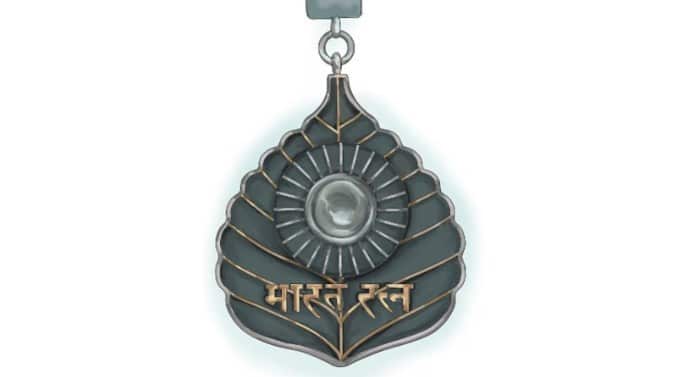
The award recognises “exceptional service or performance of the highest order.” This wording is deliberately broad. It allows scientists, freedom fighters, musicians, and even a cricketer to receive the same honour.
It is also not limited to Indian citizens. Nelson Mandela and Khan Abdul Ghaffar Khan, who was born in undivided India, both received it despite not holding Indian citizenship at the time.
Complete List of Bharat Ratna Award Winners (1954–2026)
Here is the complete list of Bharat Ratna award winners, arranged by year and the field they contributed to.
| S. No. | Name of Awardee | Year Awarded | Field/Contribution |
|---|---|---|---|
| 1 | Shri Chakravarti Rajagopalachari | 1954 | Public Affairs, Statesmanship, Freedom Movement |
| 2 | Dr. Sarvepalli Radhakrishnan | 1954 | Philosophy, Education, Public Affairs |
| 3 | Dr. Chandrasekhara Venkata Raman | 1954 | Science, Physics (Raman Effect) |
| 4 | Dr. Bhagwan Das | 1955 | Education, Philosophy, Social Service |
| 5 | Dr. Mokshagundam Visvesvaraya | 1955 | Engineering, Science, Nation Building |
| 6 | Pt. Jawaharlal Nehru | 1955 | Freedom Movement, Public Affairs, First Prime Minister of India |
| 7 | Pt. Govind Ballabh Pant | 1957 | Freedom Movement, Public Affairs, Administration |
| 8 | Dr. Dhondo Keshav Karve | 1958 | Social Reform, Women’s Education |
| 9 | Dr. Bidhan Chandra Roy | 1961 | Medicine, Public Service |
| 10 | Shri Purushottam Das Tandon | 1961 | Public Affairs, Freedom Movement |
| 11 | Dr. Rajendra Prasad | 1962 | Public Affairs, First President of India |
| 12 | Dr. Zakir Husain | 1963 | Education, Public Affairs, Former President of India |
| 13 | Dr. Pandurang Vaman Kane | 1963 | Literature, Indology, Sanskrit Studies |
| 14 | Shri Lal Bahadur Shastri (Posthumous) | 1966 | Public Affairs, Former Prime Minister of India |
| 15 | Smt. Indira Gandhi | 1971 | Public Affairs, Former Prime Minister of India |
| 16 | Shri Varahagiri Venkata Giri | 1975 | Public Affairs, Labour Movement, Former President of India |
| 17 | Shri Kumaraswami Kamaraj (Posthumous) | 1976 | Public Affairs, Freedom Movement, Social Service |
| 18 | Mother Mary Teresa Bojaxhiu (Mother Teresa) | 1980 | Social Service, Humanitarian Work |
| 19 | Shri Acharya Vinoba Bhave (Posthumous) | 1983 | Social Reform, Bhoodan Movement |
| 20 | Khan Abdul Ghaffar Khan | 1987 | Freedom Movement, Non-violence, Social Service |
| 21 | Shri Marudur Gopalan Ramachandran (Posthumous) | 1988 | Cinema, Public Affairs, Former Chief Minister |
| 22 | Dr. Bhim Rao Ramji Ambedkar (Posthumous) | 1990 | Law, Constitution of India, Social Reform |
| 23 | Dr. Nelson Rolihlahla Mandela | 1990 | Anti-Apartheid Movement, Human Rights |
| 24 | Shri Rajiv Gandhi (Posthumous) | 1991 | Public Affairs, Former Prime Minister of India |
| 25 | Sardar Vallabhbhai Patel (Posthumous) | 1991 | Freedom Movement, National Integration |
| 26 | Shri Morarji Ranchhodji Desai | 1991 | Public Affairs, Former Prime Minister of India |
| 27 | Maulana Abul Kalam Azad (Posthumous) | 1992 | Freedom Movement, Education, Journalism |
| 28 | Shri Jehangir Ratanji Dadabhai Tata | 1992 | Industry, Aviation, Business Leadership |
| 29 | Shri Satyajit Ray | 1992 | Cinema, Arts |
| 30 | Shri Gulzarilal Nanda | 1997 | Public Affairs, Former Prime Minister of India |
| 31 | Smt. Aruna Asaf Ali (Posthumous) | 1997 | Freedom Movement, Social Service |
| 32 | Dr. A. P. J. Abdul Kalam | 1997 | Science, Technology, Aerospace, Defence Research |
| 33 | Smt. Madurai Shanmukhavadivu Subbulakshmi | 1998 | Music, Carnatic Classical Singing |
| 34 | Shri Chidambaram Subramaniam | 1998 | Agriculture, Green Revolution, Public Affairs |
| 35 | Shri Jayaprakash Narayan (Posthumous) | 1999 | Freedom Movement, Social Reform, Public Affairs |
| 36 | Professor Amartya Sen | 1999 | Economics, Social Welfare Studies |
| 37 | Lokpriya Gopinath Bordoloi (Posthumous) | 1999 | Freedom Movement, Public Affairs, Assam Development |
| 38 | Pandit Ravi Shankar | 1999 | Indian Classical Music, Sitar |
| 39 | Sushri Lata Dinanath Mangeshkar | 2001 | Music, Playback Singing |
| 40 | Ustad Bismillah Khan | 2001 | Music, Shehnai, Indian Classical Arts |
| 41 | Pandit Bhimsen Gururaj Joshi | 2009 | Music, Hindustani Classical Singing |
| 42 | Prof. C. N. R. Rao | 2014 | Science, Chemistry, Research |
| 43 | Shri Sachin Ramesh Tendulkar | 2014 | Sports, Cricket |
| 44 | Shri Atal Bihari Vajpayee | 2015 | Public Affairs, Former Prime Minister of India |
| 45 | Pandit Madan Mohan Malaviya (Posthumous) | 2015 | Education, Freedom Movement, Social Service |
| 46 | Shri Nanaji Deshmukh (Posthumous) | 2019 | Social Service, Rural Development |
| 47 | Dr. Bhupendra Kumar Hazarika (Posthumous) | 2019 | Music, Arts, Culture |
| 48 | Shri Pranab Mukherjee | 2019 | Public Affairs, Former President of India |
| 49 | Shri Karpoori Thakur (Posthumous) | 2024 | Public Affairs, Social Justice, Backward Classes Welfare |
| 50 | Shri Lal Krishna Advani | 2024 | Public Affairs, Politics |
| 51 | Shri P. V. Narasimha Rao (Posthumous) | 2024 | Public Affairs, Economic Reforms, Former Prime Minister |
| 52 | Shri Chaudhary Charan Singh (Posthumous) | 2024 | Public Affairs, Farmers’ Welfare, Former Prime Minister |
| 53 | Dr. M. S. Swaminathan (Posthumous) | 2024 | Agriculture, Science, Green Revolution |
Source: Ministry of Home Affairs
Eligibility Criteria for Bharat Ratna
There is no fixed qualification for this honour. That is precisely what sets it apart from most national awards.
Anyone, regardless of profession, gender, or citizenship, can be considered. There is no age limit either.
Originally, the award covered only arts, literature, science, and public service. In 2011, the government widened this to “any field of human endeavour.” This change opened the door for sportspersons like Sachin Tendulkar.
There is one condition worth noting. Recipients cannot use “Bharat Ratna” as a prefix or suffix before their name, as per Article 18(1) of the Constitution.
How Is the Bharat Ratna Different from Other Awards?
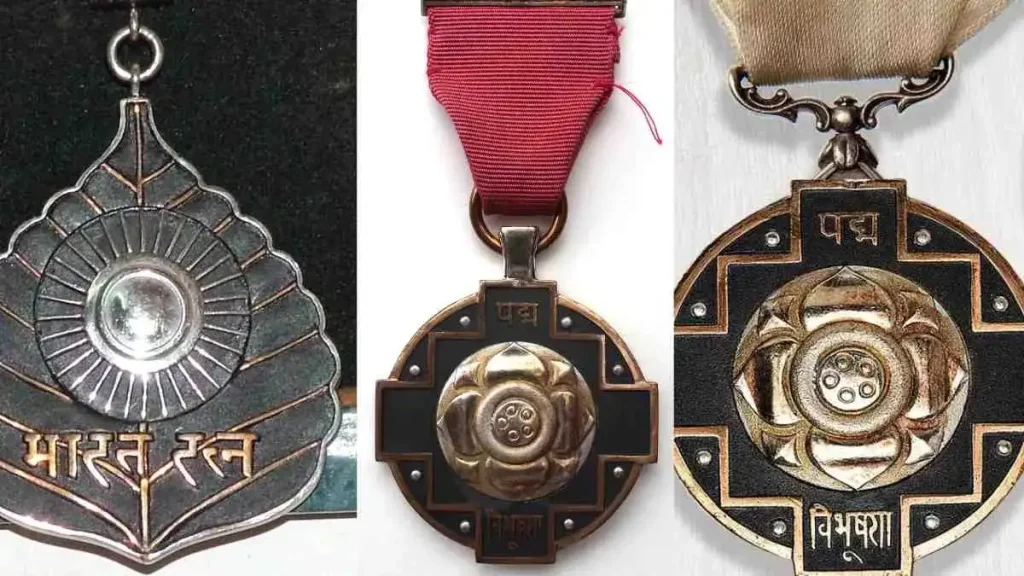
People often confuse the Bharat Ratna with Padma awards. They are related but not the same.
| Award | Rank | Purpose |
|---|---|---|
| Bharat Ratna | Highest civilian award | Exceptional service in any field |
| Padma Vibhushan | Second highest | Distinguished, exceptional service |
| Padma Bhushan | Third highest | Distinguished service of high order |
| Padma Shri | Fourth highest | Distinguished service |
The Bharat Ratna sits above all Padma awards in the order of precedence. It also has a far stricter cap, just three per year against hundreds of Padma awards given annually.
Interesting Facts About Bharat Ratna
A few details rarely make it into standard lists but say a lot about how this award has evolved.
- Only four women have ever received the Bharat Ratna. They are Indira Gandhi, Mother Teresa, M.S. Subbulakshmi, and Lata Mangeshkar.
- Subhas Chandra Bose was announced as a Bharat Ratna award winner in 1992. The decision was later withdrawn after a court challenge, since Bose is officially recorded as missing, not deceased.
- 2024 holds the record for most recipients in a single year, with five honourees, ahead of the four given in 1999.
- Music has produced more Bharat Ratna award winners than almost any other field outside public affairs, with names like Ravi Shankar, Bismillah Khan, and Bhimsen Joshi on the list.
More Suggested Topics:
Conclusion: 53 People Have Been Awarded the Bharat Ratna So Far
From scientists and freedom fighters to musicians and a cricketer, the Bharat Ratna has always stood for one thing: work that shaped the nation, not personal gain.
With only 53 recipients since 1954, this remains India’s most selective and meaningful civilian honour, awarded for merit alone, never for money or status.
FAQs
The first Bharat Ratna was awarded in 1954 to C. Rajagopalachari, Dr. Sarvepalli Radhakrishnan, and Dr. C. V. Raman for their exceptional contributions to India.
Normally, up to three Bharat Ratna awards are conferred in a year. However, exceptions occurred in 1999 and 2024, when five awards were announced.
The 2024 Bharat Ratna recipients were Karpoori Thakur, L. K. Advani, P. V. Narasimha Rao, Chaudhary Charan Singh, and Dr. M. S. Swaminathan.
Yes. The Bharat Ratna can be awarded posthumously. Since 1955, many distinguished personalities have received the honour after their death for exceptional national contributions.
Yes. Foreign nationals are eligible for the Bharat Ratna. Khan Abdul Ghaffar Khan and Nelson Mandela are the two foreign recipients of this prestigious award.
The Bharat Ratna carries no cash prize. Recipients receive a Peepal-leaf-shaped medallion and a certificate signed by the President of India.