

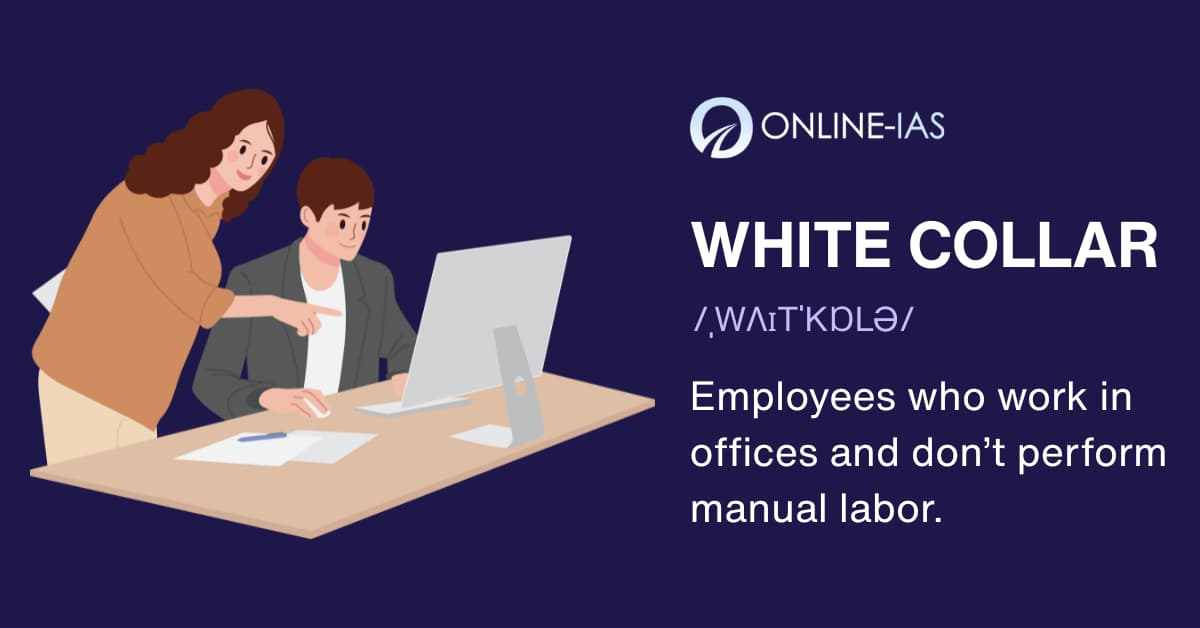
Office jobs need your mind, not your muscles. They use skills like organizing and thinking. You usually need a four-year degree for these jobs. Workers get a set salary every month or year.
The name “white-collar” started long ago. It helped separate office workers from factory workers. Office workers wore white shirts. Factory workers wore darker shirts. This job type is still very important in society.
White-collar work is key to money, law, and technology. These jobs involve big decisions. Often, a white-collar worker is like a manager in government. This means they have power. It also means they are responsible for both money and people.
What Exactly Defines A White-Collar Job?
White-collar work uses your brain a lot. It is not heavy lifting. Most tasks are about thinking. This means you plan things. You look closely at data. You also do research. Other tasks are making big plans. You also manage projects.
These jobs used to be only in an office. Now, many workers stay home. Some use a mix of home and office work. They use computers for almost everything.
These workers do not get hourly pay. They get a fixed salary each year. This salary often includes extra money. This could be bonuses or stock shares. They also get good health insurance. They get money for retirement, too.
You usually need more education to start. Most jobs need a four-year college degree. For expert jobs, you may need more. Jobs in law or high tech often need a master’s degree or special papers.
What Is the Difference Between White-Collar And Blue-Collar Jobs?
Jobs were once separated by shirt color. White shirts meant clean office work. Blue shirts meant hands-on, manual work.
The main difference now is how you get paid. White-collar workers get a set amount of money each year (a salary). Blue-collar workers are paid for each hour they work.
New jobs have made this split less clear. For example, gray-collar means technical jobs. Pink-collar jobs mean service jobs. These new names show the old lines are fading away.
| Feature | White-Collar Jobs | Blue-Collar Jobs |
|---|---|---|
| Nature of Work | Mental, analytical, strategic, and administrative | Manual, physical labor, skilled trades, and production |
| Work Environment | Offices, corporate headquarters, remote settings | Factories, construction sites, outdoors, and mechanical workshops |
| Compensation | Fixed Annual Salary (plus bonuses/benefits) | Hourly Wage or piece-rate (pay by task) |
| Education Focus | High degree of formal education (Bachelor’s, Master’s) | Vocational training, apprenticeships, trade certifications |
| Goal/Output | Managing systems, making decisions, creating policies | Producing goods, building structures, fixing machinery |
What Are The Most Common Examples Of White-Collar Jobs?
Job differences started with work clothes. White-collar jobs meant clean office work. Blue-collar jobs meant hard, messy work.
Now, the main difference is how pay works. White-collar workers get a set yearly salary. It is a stable amount of money. Blue-collar workers get paid for hours worked. This is called an hourly wage.

New, specific jobs are appearing. They make the old lines less clear. For instance, gray-collar means technical jobs. Pink-collar jobs mean service jobs, like store work.
What Are The Biggest Pros And Cons Of A White-Collar Career?
A white-collar job has good parts and bad parts. You must weigh them both.
Advantages Of A White-Collar Career
- These jobs offer security and growth. The best part is the chance for high pay. You can also move up in your career. Workers get good yearly salaries. They earn bonuses for doing well. You can become a senior manager easily.
- The office is usually safe and comfy. These jobs use the latest technology. They also let you work flexibly. You can work from home part-time.
- You usually get great benefits. These include health insurance. You get money for retirement. You also get paid vacation time. All this makes you feel safe with money and life.

Disadvantages Of A White-Collar Career
- Even with the good parts, there are hard parts. A big problem is high stress and long hours. You manage big projects. You have very tight deadlines. You are greatly responsible for the company’s results.
- You sit at a desk most of the time. This can make your life inactive. Sitting too much can lead to health issues.
- A current worry is AI taking jobs. Technology is now doing simple tasks. Workers must always learn new skills. If not, their jobs might change or be gone.
- Also, starting these jobs costs a lot of money. Degrees like MBAs are expensive. This cost can block people from entering the field.
How Is Technology Changing The Future Of White-Collar Work?
Generative AI and new technology are making the biggest changes to office jobs since the internet began. AI is quickly transforming roles by handling many routine thinking tasks. These tasks used to take time for less experienced workers.
Examples include writing reports, summarizing large legal documents, fixing simple code, and entering data.
Due to this trend, companies are now trying to work faster and better. Sometimes, this results in hiring fewer entry-level workers. AI tools now function like junior assistants. This shift pushes work away from tasks that can easily be automated and towards jobs that need high-value judgment.

This change is also blurring traditional job boundaries. It has introduced concepts like the “no-collar” worker. This term often refers to freelancers and creative professionals. They operate outside a strict corporate system. They value flexibility and prefer project-based work rather than a fixed salary.
To thrive in this new digital environment, white-collar workers must learn new skills. They need to be proficient in using AI tools, which is known as prompt engineering. They must also emphasize human skills such as emotional intelligence and making ethical decisions.
Finally, they need to focus on solving complex problems that require creativity and strategic thinking. These are areas where machines still fall short.
Suggested Reads:
Conclusion: White-Collar Work Is Professional, Knowledge-Driven Work
The white-collar worker remains essential for global business and government. Their main role is still the same: to use their intellect and management skills to organize and lead. However, the tools and skills they require have changed for good.
AI is taking over simple, everyday tasks. As a result, workers must focus on higher-level activities. These include setting strategies, managing ethics, and leading teams.
To succeed in a white-collar career, you need to work with AI. You should bring unique human judgment and creativity to AI’s efficiency. This career path offers good pay and influence.
However, success now demands continuous learning and the development of skills that machines cannot replicate.
FAQs
This job involves physical work or skilled trades. Examples are building, factory work, or mechanics. These workers are usually paid by the hour.
Examples are Software Developers, Financial Analysts, or Marketing Managers. They do work based on knowledge and thinking.
This is a job working for the government. It includes all civil servants. Their pay comes straight from public funds.
This term often means people in creative work. Examples are journalists, photographers, and filmmakers. They mix thinking with technical skills.
This is a mixed job. It uses both hands-on work and mental tasks. These jobs often need special licenses. Examples are IT technicians, police, or paramedics.