
IAS and Collector are not the same thing. IAS (Indian Administrative Service) is a government job category, while Collector is a specific work position within that category.
Many people get confused because most District Collectors are IAS officers, so they think both terms mean the same thing. But here’s the real difference: IAS is a career for life, while Collector is just one of many jobs you might do during that career.
This article explains both terms clearly and shows how an IAS officer gets the Collector position.
Key Takeaway: Is IAS & Collector the Same?
- IAS is a service/cadre selected through UPSC; Collector is a posting within that service.
- An IAS officer serves in multiple roles throughout their career; Collector is just one.
- The Collector post typically comes 4-8 years into an IAS officer’s career.
- Not all IAS officers become Collectors, but all Collectors are IAS officers.
Key Differences Between IAS And Collector
The distinction mirrors the difference between a profession and a job title.
IAS represents the entire administrative career path from selection until retirement, encompassing numerous postings across district, state, and central government levels.
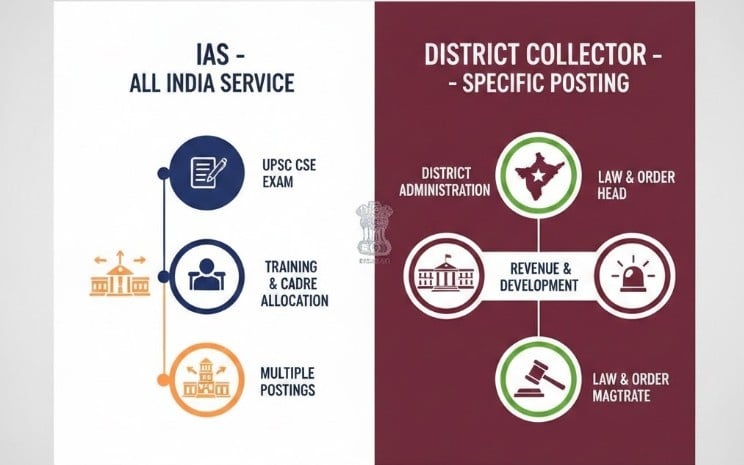
A collector denotes a specific position that an IAS officer occupies for a limited period at the district level.
Here is the IAS vs Collector – Quick Comparison:
| Aspect | IAS | District Collector |
|---|---|---|
| Type | Service/Cadre | Post/Designation |
| Selection | UPSC CSE | Posted by State Govt |
| Duration | Entire Career (till retirement) | 2-3 years typically |
| Authority Level | Varies by posting | District Level |
| Other Names | – | DM, DC, Deputy Commissioner |
| Governed By | IAS (Cadre) Rules, 1954 | State Administration Rules |
This fundamental difference explains why an IAS officer’s identity remains constant while their functional role changes based on government postings.
1. Nature of Position
- IAS operates as a permanent service framework. Once selected through UPSC, an officer remains part of the IAS cadre throughout their career, regardless of current posting.
- The collector functions as a temporary designation. An IAS officer receives this posting for 2-3 years before moving to another role.
2. Career Progression
- The Collector posting typically arrives after 4-8 years of IAS service and represents the first major independent charge. Before this, an IAS officer serves as Sub-Divisional Magistrate (SDM) or Assistant Collector.
- After completing their tenure as Collector, IAS officers progress to higher positions like Divisional Commissioner, Secretary, or Joint Secretary roles.
3. Scope
- IAS officers operate across a vast administrative spectrum. They may work in district administration, state secretariats, or central government ministries throughout their careers.
- Collectors exercise authority exclusively at the district level, overseeing all administrative, revenue, and developmental activities within their assigned district.
What Is the IAS (Indian Administrative Service)?
The Indian Administrative Service is the premier administrative civil service under the Government of India. IAS forms the premier cadre that carries out administrative duties and public service.

Officers enter through the competitive UPSC Civil Services Examination. The IAS operates as a permanent career service with multiple postings throughout an officer’s tenure.
The service is governed by IAS (Cadre) Rules, 1954, and IAS (Pay) Rules, 2016.
What Is a District Collector?
The District Collector is the head of district administration and represents a specific designation, not a service.
Also known as District Magistrate (DM) or Deputy Commissioner (DC), this position carries three primary responsibilities: revenue administration, maintenance of law and order, and coordination of development programs.
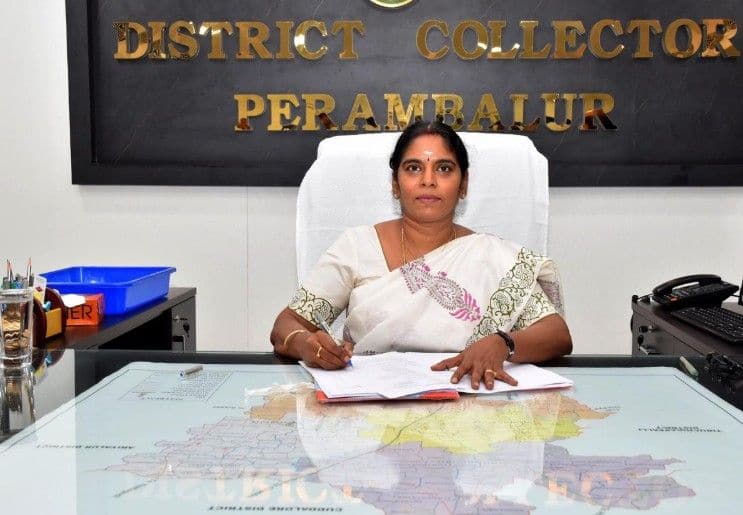
The Collector acts as the pivotal link between state government policies and ground-level implementation within district boundaries.
Who Is More Powerful – IAS Or Collector?
This comparison is invalid; you cannot compare a service with a post. An IAS officer’s power varies based on their current posting. The Collector is one of the most powerful district-level posts.
However, a Cabinet Secretary (IAS) holds far greater power than a Collector (also IAS). The same IAS officer has different power levels at different career stages.
IAS Officer Salary Vs Collector Salary
There is no separate “Collector salary”; both terms refer to the same person at different levels.
Salary is determined by the IAS Pay Rules 2016 (7th Pay Commission), calculated based on pay level and years of service, not by post designation.
An officer’s compensation depends on the grade they’ve reached through career progression. A Collector typically falls in Junior Administrative Grade (JAG) or Selection Grade, with basic pay ranging from ₹78,800 to ₹1,18,500 per month, plus allowances.
Let’s take a look at the IAS Pay Structure (As per IAS Pay Rules 2016):
| Grade | Pay Level | Years of Service | Basic Pay (₹/month) | Typical Posts |
|---|---|---|---|---|
| Junior Time Scale (JTS) | Level 10 | 0-4 years | ₹56,100 | SDM, Assistant Collector |
| Senior Time Scale (STS) | Level 11 | 4-9 years | ₹67,700 | ADM, SDM |
| Junior Administrative Grade (JAG) | Level 12 | 9-13 years | ₹78,800 | District Collector/DM, Deputy Secretary |
| Selection Grade (SG) | Level 13 | 13-16 years | ₹1,18,500 | Senior Collector, Director |
| Super Time Scale | Level 14 | 16-24 years | ₹1,44,200 | Joint Secretary, Commissioner |
| Above Super Time Scale | Level 15-16 | 24-30 years | ₹1,82,200 – ₹2,05,400 | Additional Secretary, Chief Secretary |
| Apex Scale | Level 17 | 30+ years | ₹2,25,000 (Fixed) | Principal Secretary |
| Cabinet Secretary | Level 18 | Apex | ₹2,50,000 (Fixed) | Cabinet Secretary |
Note:
- Basic pay figures reflect the 7th Pay Commission structure (effective January 2016).
- Total salary includes DA (currently ~53% as of Dec 2024), HRA (8-24%), and TA.
- In-hand salary for entry-level IAS: ₹75,000-85,000 per month.
- In-hand salary for District Collector: ₹1,20,000-1,50,000 per month (approx.).
How Does An IAS Officer Become A Collector?
No separate “Collector exam” exists. Candidates must clear the UPSC Civil Services Examination (Prelims, Mains, Interview), followed by merit-based selection and cadre allocation.
After two years of training at LBSNAA Mussoorie and district training, officers receive their first posting as SDM.
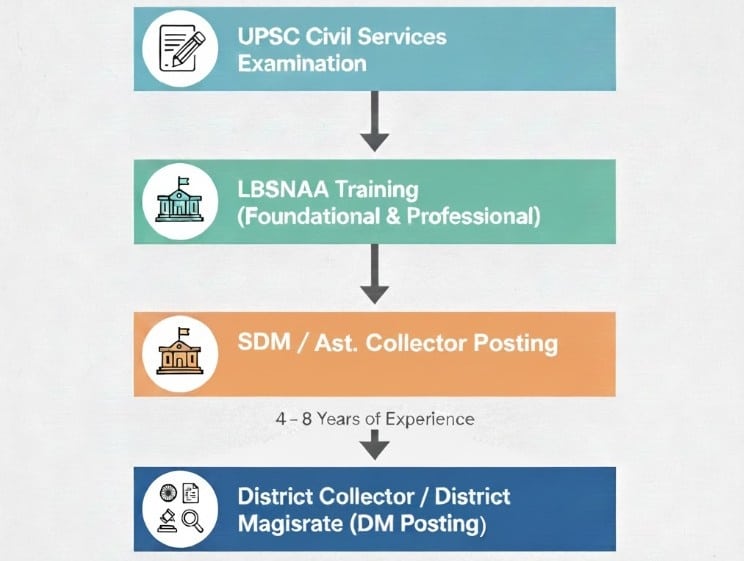
After 4-8 years at the JAG level, they become eligible for a Collector/DM posting, decided by the State Government based on seniority and vacancies.
Also Read:
Conclusion: IAS Is The Service, And The Collector Is One Administrative Post Within It
IAS represents a career service, while Collector represents a job role within that service. Every Collector is an IAS officer, but not every IAS officer currently serves as Collector.
The Collector posting stands as an IAS officer’s most prominent district-level assignment, offering extensive authority and responsibility.
Understanding this difference helps UPSC exam candidates plan their careers better and helps regular citizens understand how India’s government system works.
FAQs
This comparison is invalid because IAS is the service, and Collector is one posting within it, you cannot compare a profession with a job title.
TheCabinet Secretary represents the apex position at Pay Level 18, serving as the senior-most civil servant advising the Prime Minister and coordinating all government departments.
District Magistrate (DM) in northern states and Deputy Commissioner (DC) in southern and northeastern states are the primary alternate names used across India.
The Cabinet Secretary holds the highest-ranking IAS position, serving as the administrative head overseeing all central government secretaries and ministries in the country.
A Collector in JAG earns ₹78,800 basic pay (Level 12), with a total in-hand salary of ₹1,20,000-1,50,000 monthly, including DA, HRA, and other allowances.