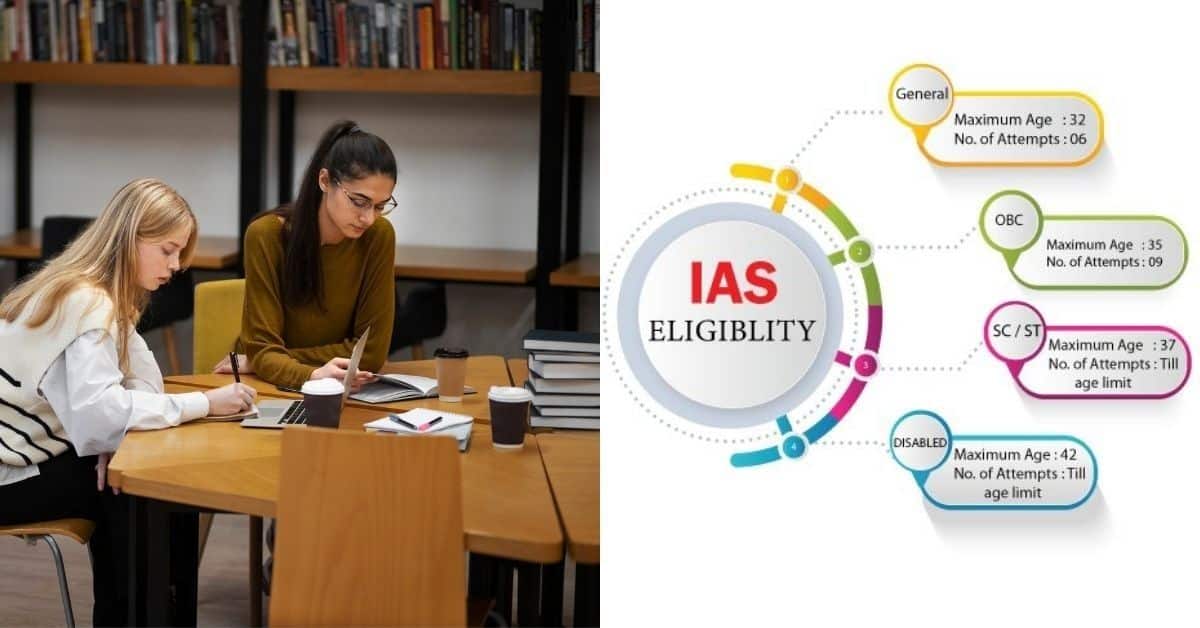
The standard age range for the UPSC examination is 21 to 32 years for the General Category. However, there are important age benefits for candidates from reserved groups.
UPSC (Union Public Service Commission) conducts the Civil Services Examination (CSE). It is used for recruitment to top government positions like IAS, IPS, IFS, etc., in India. The first thing you need to know before you can prepare for the exam is the age limit.
In this article, I’m going to offer you a clear, detailed guide on the age limits, allowed attempts, and necessary eligibility rules for the 2025 and 2026 examination cycles. Make sure to read until the end to know all the key points!
Mandatory UPSC Age Limit Criteria (For All Candidates)
There are certain age requirements for the UPSC Civil Services Examination (CSE). They are mandatory for all aspirants, no matter their background or any reserved status.

First of all, all candidates should be at least 21 years of age. Moreover, there is also a maximum age requirement for all candidates, determined by a fixed date (August 1) in the year in which the Preliminary Examination occurs.
Let’s take an example of a General Category candidate. If they are attempting the 2026 CSE, the age that they will be on August 1, 2026, will determine if they’re eligible for the exam.
Detailed UPSC Age Limit & Attempts By Category
Here’s a quick table on age limit, relaxation, and number of attempts permitted for each category:
| Category | Minimum Age | Maximum Age (Upper Limit) | Age Relaxation | Maximum Attempts |
|---|---|---|---|---|
| General Category & EWS | 21 Years | 32 Years | None | 6 |
| OBC (Other Backward Class) | 21 Years | 35 Years | 3 Years | 9 |
| SC / ST (Scheduled Caste / Tribe) | 21 Years | 37 Years | 5 Years | Unlimited (Up to age limit) |
| PwBD (General/EWS) | 21 Years | 42 Years | 10 Years | 9 |
| PwBD (OBC) | 21 Years | 45 Years | 13 Years (10 + 3) | 9 |
| PwBD (SC/ST) | 21 Years | 47 Years | 15 Years (10 + 5) | Unlimited (Up to age limit) |
As you can see, the rules are different for every group. This is why it is important to know eligibility criteria when decide to prepare for UPSC. Furthermore, I’ll explain these relaxations for each specific category in greater detail.
Category-Specific Age Relaxation Details
In this section, we’ll discuss the specific age and attempt benefits provided based on the candidate’s community category.
1. General and EWS Category Rules
People in the General and Economically Weaker Section (EWS) categories must be between 21 and 32 years old. There is no extra age benefit given to these groups. Both General and EWS candidates can attempt the exam a maximum of 6 times.
2. OBC Category Relaxation
The OBC candidates are provided 3 years relief in the maximum age, so they can fill up to 35 years. For OBC candidates, the number of attempts allowed is 9.
Key Note: So this is only applicable for Non-Creamy Layer (NCL) candidates. This is something you have to show with a certificate issued by the government.
3. SC/ST Category Relaxation
The Scheduled Caste and Scheduled Tribe categories get the largest benefit of 5 years. Candidates from these categories can attempt the UPSC CSE up to 37 years.
Moreover, SC/ST aspirants have unlimited attempts. They can appear as many times as they wish, provided they do not exceed the age of 37.
Special UPSC Age Relaxations (Ex-Servicemen & PwBD)

The UPSC offers special age benefits for candidates with disabilities and those who served in the defense forces. We’ll be discussing those benefits in this section.
1. Persons with Benchmark Disability (PwBD)
The age benefit for candidates with disabilities (PwBD), which includes blindness and other physical challenges, is combined (or cumulative). For instance:
- General/EWS PwBD: Maximum age 42 years (32 + 10). Maximum attempts are 9.
- OBC PwBD: Maximum age 45 years (32 + 3 + 10). Maximum attempts are 9.
- SC/ST PwBD: Maximum age 47 years (32 + 5 + 10). Maximum attempts are unlimited.
This means the base 10 years of relaxation for disability is added to any age benefit they already get from their social category (OBC or SC/ST).
2. Ex-Servicemen (ECOs/SSCOs/Commissioned Officers)
Ex-Servicemen who have completed at least five years of military service can get an extra 5 years added to their age limit. This benefit depends on the official terms of their exit from service and can be combined with other category benefits.
It allows for the maximum age to be extended to 37 years (for General candidates), 40 years (for OBC candidates), and 42 years (for SC/ST candidates).
3. Jammu & Kashmir Domicile Candidates
A standard 5-year age benefit is given to candidates who were permanent residents of the Union Territory of Jammu & Kashmir between January 1, 1980, and December 31, 1989.
Quick Check: Other Essential UPSC Eligibility Criteria
While age and the number of times you can attempt the exam are the main points, you must meet two other necessary rules to be eligible:
1. Nationality
For the most prestigious services like the IAS, IFS, and IPS, you must be an Indian Citizen. For other services, you might be eligible if you are a subject of Nepal or Bhutan, or a Person of Indian Origin (PIO) who has moved to India with the plan to stay permanently.
2. Educational Qualification
You must have a Bachelor’s Degree from any recognized University or hold an equivalent qualification that the Government approves.
Key Note: Students who are currently in their final year of college can write the Preliminary Exam. However, they must provide proof that they have passed their degree before applying for the Mains Examination.
Suggested Reads:
Conclusion: Your Eligibility Depends On Your Category
The UPSC Civil Services Exam rules for age and attempts are clear and fixed. If you are an aspirant, follow the guidelines strictly for your category (General, EWS, OBC, SC/ST, or PwBD).
Although we have given the updated information, it is always best to check the official UPSC notification for the latest updates. After this step is done and you know that you have passed the eligibility criteria, you can devote all of your energy to preparation.
Now that you know if you’re eligible to sit for the exam, the time has come to shift entirely to execution. Start building your focused study strategy today and make every allowed attempt count!
FAQs
A 40-year-old can take the exam if they belong to a reserved category with an age limit beyond 40. For example, a candidate in the PwBD (SC/ST) category is eligible up to 47 years of age.
The minimum requirement for the UPSC Civil Services Exam is a Bachelor’s Degree from a recognized university. A 12th pass certificate alone is not enough to apply.
The 7/5/3 rule is a strategic answer-writing technique for the UPSC Mains exam. It stands for: 7 minutes per answer, five key points in the body, and three analytical dimensions (like social, political, and economic) for thorough coverage.
A score of 800 marks is generally considered a very good score in the written exam. It can place the candidate well above the Mains cut-off required to qualify for the Interview.
Many successful candidates, including toppers, clear the exam at the young age of 22 or 23. For example, Donuru Ananya Reddy (AIR 3 in 2023) and Neha Byadwal (AIR 569 in 2021).