
UPSC is the Union Public Service Commission, a constitutional body established under the Indian Constitution to conduct exams for recruiting civil servants. It is India’s gateway to the most prestigious government positions like IAS, IPS, and IFS.
The primary role of UPSC is to conduct the Civil Services Examination, which determines who enters these elite services.
This article will walk you through everything about UPSC, from what it does and how the exam works to eligibility rules, salary details, and why it’s considered India’s toughest exam, helping you decide if this path is right for you.
What is UPSC? (Understanding the Organization)
UPSC isn’t just an exam; it’s a body created by the Indian Constitution under Articles 315-323.
Many people mix up UPSC with the Civil Services Examination itself, but here’s the difference: UPSC is the organization, while CSE is its most well-known exam. Think of UPSC as the gatekeeper and CSE as the test you need to pass.
This body recruits officers for the IAS and the Indian Police Service (IPS), along with 22 other top services. Its job under the Constitution is to ensure that hiring happens based on ability, not politics or favoritism.
Key Functions of the UPSC
UPSC does more than just hold exams.
It gives advice to the government on hiring rules, service matters, and discipline issues. It supports selection based on merit while keeping the process clear at every step from the first exam to the final interview.
Its freedom from outside pressure is protected. No government official can decide who gets selected, making sure only the most capable people enter India’s government system.
This advisory work makes UPSC a protector of fair administration, not just an exam body.
UPSC Exam – Civil Services Examination (CSE)
The Civil Services Examination is UPSC’s main test, and it’s what most people mean when they say “UPSC exam.” This three-part challenge, Prelims, Mains, and Interview, decides who becomes an IAS, IPS, or IFS officer.
It’s probably India’s hardest competitive exam, and there’s a good reason. The CSE tests not just what you know but how well you analyze, make decisions, and handle pressure over almost a year.
What is UPSC Eligibility Criteria?
Here’s what you need.
First, education: you must have a degree from a recognized university in any subject. Age must be between 21 and 32 years for General category people, with relaxation for OBC (35 years) and SC/ST (37 years).
Attempts count too. The general category gets 6 tries, OBC gets 9, while SC/ST have unlimited attempts until they reach the upper age limit.
For nationality, you must be an Indian citizen for most services, though some posts, such as the IFS, have specific rules.
What is UPSC Syllabus?
Although there is no single best stream, a humanities background is considered the most advantageous stream for UPSC because the topics lean heavily toward subjects like history, geography, political science, and sociology.
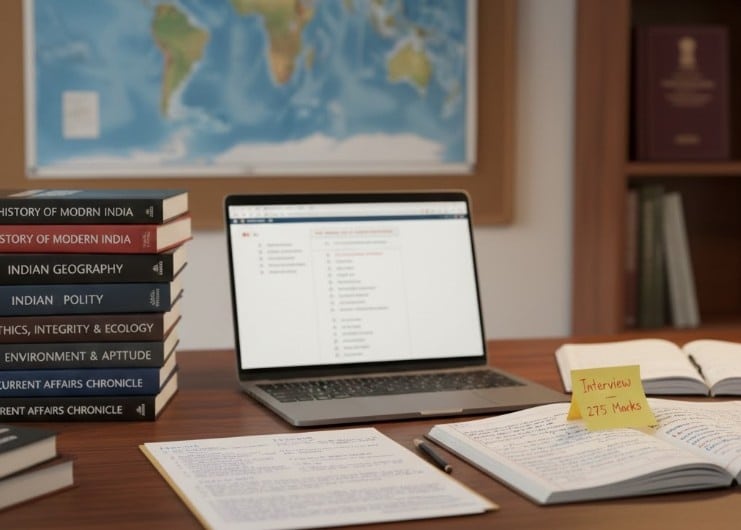
But if you’re from science or commerce, don’t worry with serious preparation, any graduate can clear this exam.
Prelims Syllabus
GS Paper 1 is your first test. It covers current affairs, Indian and world history, geography, government and politics, economy, environment, and science. This 200-mark paper with multiple-choice questions needs wide knowledge.
CSAT Paper 2 checks reading skills, logical thinking, basic math, and decision-making. You need 33% to pass (it’s the qualifying mark), but many people fail here, so don’t take it lightly.
Mains Syllabus
Mains is where the real fight starts. The Essay Paper comes first to check whether you can express your thoughts clearly.
GS Papers 1-4 go deeper: Paper 1 looks at Indian culture, heritage, history, and world geography; Paper 2 focuses on governance, constitution, politics, social justice, and international relations.
Paper 3 covers technology, economic growth, biodiversity, environment, security, and disaster handling; Paper 4 is about ethics, honesty, and attitude.
Then there’s your Optional Subject: two papers from a subject you choose, which can really affect your rank. Language Papers (English plus one Indian language) are qualifying but still matter.
Interview
The 275-mark interview looks at how you communicate, your awareness of current issues, your judgment when challenged, and your leadership qualities. The panel wants to see if you can think quickly and stay calm under pressure.
UPSC Jobs – Services and Posts
The All India Services, IAS, IPS, and Indian Foreign Service (IFS) are the top services. For 2025, UPSC announced hiring for 1129 posts across these and other services.
Central Services Group A includes the Indian Revenue Service (IRS), the Indian Audit and Accounts Service (IAAS), and several others. Group B services offer different career paths but remain highly respected.
| Service | Full Form | Role |
|---|---|---|
| IAS | Indian Administrative Service | District & policy administration |
| IPS | Indian Police Service | Law & order |
| IFS | Indian Foreign Service | Diplomacy |
| IRS | Indian Revenue Service | Tax administration |
Once selected, officers go through tough training.
IAS and IPS officers train at the Lal Bahadur Shastri National Academy of Administration (LBSNAA) in Mussoorie, where they spend months learning how to run districts, lead teams, and handle field work before getting their first postings.
What is UPSC Salary and Benefits?
Starting salary for civil servants is ₹56,100 per month as basic pay according to the 7th Pay Commission report.
With allowances, cost of living adjustment, house rent, and transport, the total salary ranges between ₹80,000 and ₹1,00,000 each month for new officers. At the top, the Cabinet Secretary earns ₹2,50,000 per month.
Beyond salary, you get government housing, official cars, complete medical care for your whole family, and a pension that takes care of you after retirement.
Why UPSC is India’s Toughest Exam
With roughly 10 lakh people competing for less than 1,000 seats, the success rate is around 0.1%.
But it’s not just about competition; it’s the huge syllabus covering everything from ancient history to modern science, the three-stage process that tests different skills, and the fact that most successful people spend 12-18 months preparing seriously.
The mental strength needed to stay motivated through this makes UPSC as much a test of your mind as your knowledge.
Suggsted Reads:
Conclusion: Upsc Is Where Merit Meets Opportunity To Serve A Billion People
UPSC is more than just an exam; it’s India’s system for finding leaders who’ll create policies that touch a billion lives.
Being an IAS or IPS officer comes with deep respect and serious responsibility, but you also get complete job security and the chance to make real change. If you’re feeling both excited and nervous right now, that’s the right feeling.
The path isn’t easy, but for those who make it, serving the nation while building a respected career is worth everything. Every successful officer started exactly where you are today.
FAQs
UPSC runs exams for hiring civil servants and guides the government on service rules, discipline matters, and hiring policies while keeping constitutional freedom in the selection process.
Entry-level civil servants get ₹56,100 basic pay monthly per the 7th Pay Commission, with total salary reaching ₹80,000-₹1,00,000, including allowances, plus housing, vehicle, and medical benefits.
No, you must have a bachelor’s degree from any recognized university in any subject to be eligible for the UPSC Civil Services Examination.
The full form of Union Public Service Commission is the constitutional body in India that conducts civil services exams and advises on government hiring matters.
UPSC’s main duty involves running merit-based hiring exams for All India Services and Central Services while giving independent advice on government appointments and personnel issues.