The concept of a Uniform Civil Code, or UCC, relates to a code that is designed to harmonize the various religion-based personal laws in force in India under one civil code of marriage, divorce, succession, and adoption.
As per Article 44 of the Indian Constitution, the state is required to endeavor to introduce a Uniform Civil Code for all the citizens of India. Article 44 is a Directive Principle of State Policy.
What is a Uniform Civil Code (UCC)?
Uniform Civil Code is the process by which the personal civil laws of all citizens in India will be unified regardless of the religion of the individuals concerned.
The Uniform Civil Code derives its origin from the directive principles of state policy provided in the Indian Constitution in Article 44, where the State is required to make efforts for the enforcement of a uniform civil code in India.
It needs to be stated that the directives provided in the Constitution of India are non-justiciable in nature and thus cannot be enforced directly by the courts.
Where States Stand: UCC Progress Across India
Five states have moved on a UCC so far, at different stages of the process.
| State | Status | Key Development |
|---|---|---|
| Uttarakhand | In force | First state to implement UCC. The law took effect on January 27, 2025, after the assembly passed it in February 2024. |
| Gujarat | Passed | The assembly passed its UCC bill on March 24, 2026, becoming the second state to adopt one. |
| Assam | Passed | The assembly passed its UCC bill on May 27, 2026, becoming the third state and the first in the Northeast. |
| Madhya Pradesh | Cabinet approved | The cabinet cleared the draft on July 19, 2026. The bill goes to the assembly in the monsoon session. |
| Rajasthan | Drafting | A panel led by Justice Ranjana Prakash Desai was set up in April 2026 to prepare a draft law. |
What Is the Constitutional Purpose Behind the Uniform Civil Code?
The framers of India’s Constitution considered a common civil code in 1948. There was no agreement on implementing it immediately, which is why it has been included among the Directive Principles of State Policy and not the Fundamental Rights.
From the time of independence, Indians have mostly observed personal laws based on their religious affiliation. Hindu, Muslim, Christian, and Parsi communities have different rules about marriage, divorce, and inheritance.
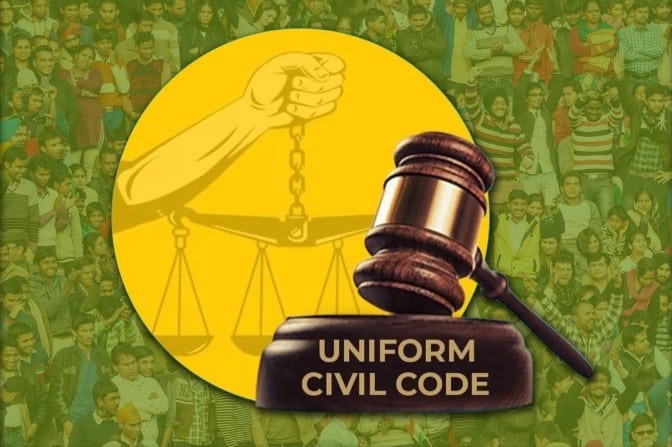
The Shah Bano case in 1985 brought the issue of the UCC to light. The court ruled in favour of the right to maintenance for a Muslim woman, but Parliament enacted a law limiting the implications of the ruling. This case has become a precedent for every further discussion about the UCC.
In Goa, a common civil code has existed since the colonial era, which is used to prove that a UCC can be implemented in India. Uttarakhand is the first Indian state to introduce a UCC after independence, and it entered into force in January 2025.
Why Do Supporters Want a Uniform Civil Code in India?
The pro-arguments suggest that a UCC will ensure equality before the law for all citizens, regardless of religion.
Here, women’s empowerment becomes the key argument as some personal laws permit differential sharing of inheritance and offer easier divorce options for men. This can be eliminated through the introduction of a unified code, and a common standard will apply for everybody.
A common law will simplify the judicial process in cases where the judges have to determine the applicable personal law. In this regard, having a single code will help in simplifying the process for judges and lawyers.
Another pro-argument relates to the issue of national integration, whereby the adoption of the common civil laws will lead to strengthening citizenship.
Why Do Critics Oppose a Uniform Civil Code in India?
Critics have pointed out that a Uniform Civil Code may come in the way of centuries-old practices and traditions of religion and culture.
Muslim community leaders have expressed reservations about a UCC shaped by the dominant community, fearing that it could undermine or replace their personal laws.

The issue of time and process is another criticism of the UCC. Critics argue that a UCC requires broad consultation across religions and regions rather than speedy enactment through state legislatures. Tribal groups have also raised concerns.
Most tribal communities have different customary laws regarding marriage, inheritance, and property. Every state UCC, including Uttarakhand’s, preserves the customs of tribal communities.
What Is the Current Legal and Political Status of the Uniform Civil Code?
Although the Supreme Court has deliberated on the necessity of introducing a UCC in landmark cases such as that of Shah Bano, the Supreme Court has not instructed the government to do so since Article 44 is a directive principle.
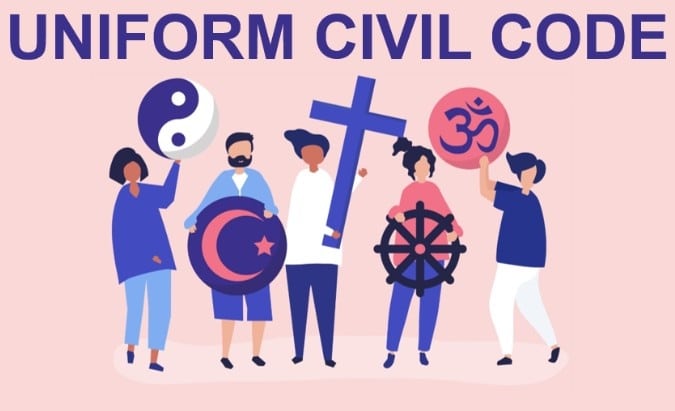
Uttarakhand was the first state to pass the law of the UCC, which addresses the aspects of marriage, divorce, inheritance, and cohabitation. Other states such as Gujarat and Assam have followed suit, whereas others are trying to formulate the same.
Most state UCC laws establish common marriage norms and ban polygamy, while Parliament has not yet introduced a nationwide UCC.
More Suggested Reads:
Conclusion: A Debate Still Being Written State by State
Uniform Civil Code is no longer a constitutional concept but an enacted piece of legislation by various states, beginning with Uttarakhand in 2025.
All the legislations on UCC concentrate on general regulations concerning marriage, property inheritance, etc., while excluding the Scheduled Tribes from their application range.
In order to pass a nationwide UCC, actions of the Parliament are required. The most important question remains how to balance equal rights of citizens and protection of customs of certain communities.
FAQs
The Uniform Civil Code (UCC) proposes a single, integrated body of law to replace fragmented personal laws. It is based on a universal civil code covering matters like marriage, divorce, adoption, inheritance, and maintenance, among others.
A Uniform Civil Code in India continues to be highly difficult to implement, taking into account the tremendous diversity in culture and religion found in the country. The main obstacles in this respect include the absence of any consensus among religious groups, concern over hurting minorities, and constitutional guarantees for tribes.
In India, Uttarakhand was the first state to adopt the Uniform Civil Code in its entirety in 2025 on 27th January. It applies to all citizens excluding Scheduled Tribes. Before Uttarakhand, Goa followed a common civil code system derived from the Portuguese Civil Code of 1867. Other states such as Gujarat and Assam have also adopted UCC systems.
Yes, the Uniform Civil Code requires citizens to register matters such as marriage, divorce, and cohabitation in states where the law applies. The law applies not only to those who reside in the state but also to outsiders staying in that state. For instance, the UCC of Uttarakhand compels registration for certain personal issues.