To qualify for the Indian Foreign Service, you need four things. Indian citizenship, a bachelor’s degree, the right age, and a cleared UPSC Civil Services Exam.
There is no separate IFS exam, and you also don’t need a degree in political science or international relations. Science, engineering, commerce, arts, medicine- any background works.
What actually decides your entry isn’t your subject. It’s your final rank and whether you choose IFS as your top preference.
In this article, you will learn everything about Indian Foreign Service qualification, including who can apply, the required education, age limit, number of attempts, UPSC selection process, and what actually determines your chances of becoming an IFS officer.
What Is the Indian Foreign Service?
The Indian Foreign Service is India’s diplomatic wing. Officers represent the country at embassies, consulates, and international forums abroad.
They work under the Ministry of External Affairs. Their job includes trade talks, treaty negotiations, and protecting Indian citizens overseas.
An IFS officer is often the first face of India that a foreign government deals with. That’s the weight the role carries.
Recruitment happens through the UPSC Civil Services Exam, the same exam used for IAS and IPS. There’s no separate Indian Foreign Service exam.
Indian Foreign Service Qualification: Eligibility Criteria
Here’s every requirement for qualifying for the Indian Foreign Service Exam.
Nationality Requirement
You must be an Indian citizen. There’s no relaxation on this, unlike some other central services that allow certain foreign nationals.
Educational Qualification
You need a bachelor’s degree from a recognized university. Any stream works: science, commerce, arts, engineering, medicine- all count.
Final-year students can apply too. You just need to clear your degree before the interview stage.
Here’s a common myth worth busting. You don’t need a degree in political science or international relations to join the Indian Foreign Service.
Officers from engineering and medical backgrounds serve in IFS every year. Your optional subject matters more than your degree stream.
Age Limit
You must be between 21 and 32 years old for the general category. Reserved categories get extra years.
| Category | Upper Age Limit |
|---|---|
| General/EWS | 32 years |
| OBC | 35 years |
| SC/ST | 37 years |
| PwBD | 42 years |
Number of Attempts
Your attempts are counted from your first prelims, whether or not you appeared for mains.
| Category | Attempts Allowed |
|---|---|
| General/EWS | 6 |
| OBC | 9 |
| SC/ST | Unlimited (till age limit) |
| PwBD (General/EWS/OBC) | 9 |
| PwBD (SC/ST) | Unlimited |
Physical and Medical Standards
IFS doesn’t demand the physical standards that IPS requires. There’s no height, chest, or endurance test involved.
A basic medical fitness check happens after selection, before joining. It confirms you’re fit for postings abroad, including in tough climates.
IFS Selection Process
The Indian Foreign Service exam isn’t a standalone test. It’s three stages within the Civil Services Exam.
1. Preliminary Exam
This is an objective screening round with two papers, General Studies and CSAT. It only qualifies you for mains; marks aren’t counted for the final rank.
2. Main Exam
Nine descriptive papers, including an optional subject, essay, and General Studies. This stage carries the real weight in your final merit.
3. Personality Test / Interview
A face-to-face interview by a UPSC panel. For IFS specifically, this stage matters a lot, since it checks communication and composure under pressure.
Rank Required for IFS
There’s no fixed cutoff published for IFS alone. It shifts every year based on vacancies and how aspirants rank IFS in their preferences.
As a rough sense, candidates within the top few hundred ranks, along with IFS as a high preference, generally get considered.
Training After IFS Selection
Getting selected isn’t the finish line. Every IFS officer goes through structured training before their first posting.
It starts with a foundation course at LBSNAA, Mussoorie, alongside IAS and IPS officers. This builds shared understanding across services.
After that, officers move to the Foreign Service Institute in Delhi for specialised diplomatic training.
Learning a foreign language is compulsory here. Officers are assigned a language based on service needs, and it becomes central to their first posting.
Field attachments follow, including time with a state government and a stint at an Indian mission abroad, before independent charge begins.
Indian Foreign Service Jobs: What the Career Actually Looks Like
Indian Foreign Service jobs come with postings across Indian embassies, consulates, and international organisations like the UN.
Early postings often mix domestic assignments at the Ministry of External Affairs with foreign postings abroad.
Pay follows the standard civil services pay matrix, along with foreign allowances during overseas postings, which are usually higher than domestic pay.
How IFS Is Different From IAS/IPS Qualification-Wise
The eligibility for IFS, IAS, and IPS is identical. Same age limit, same education requirement, same number of attempts.
What separates them is your rank in the final list and the service preference you filled out on the form.
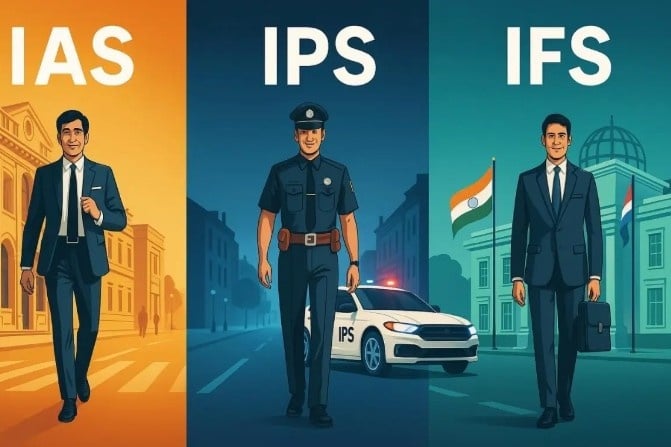
IFS has very few seats each year, usually around 30 to 40. So even a decent rank doesn’t guarantee it if your preference order isn’t right.
If IFS is your goal, rank it as your top preference. A lower rank with IFS as first choice often beats a better rank with IFS as fourth choice.
Quick Tips for Aspirants Targeting IFS
- Pick an optional subject you can score consistently well in, not just one that interests you
- Rank IFS as your top preference on the form if it’s genuinely your goal
- Read international relations and foreign policy news daily; it helps in both mains and interview
- Practice mock interviews focused on composure, not just knowledge
Conclusion
There’s no separate IFS exam, no special degree, and no extra entrance test involved anywhere. A bachelor’s degree in any stream, an age between 21 and 32, and Indian citizenship cover the basic eligibility.
Beyond that, your final selection into the Indian Foreign Service depends entirely on your rank and how high you place IFS in your preference list.
FAQs
No. Indian Foreign Service (IFS) officers are selected through the Civil Services Examination (CSE) conducted by the UPSC, the same examination used for IAS and IPS.
There is no fixed rank for IFS selection. It varies every year depending on vacancies, candidates’ preferences, category, and the final UPSC merit list.
Yes. Candidates from science, engineering, commerce, arts, or any recognized discipline can apply for IFS. There is no requirement to study political science.
The attempt limits are the same as IAS and IPS: 6 for General/EWS, 9 for OBC, and unlimited for SC/ST until the age limit.
Neither service is better than the other. IFS focuses on diplomacy and international relations, while IAS deals with governance, administration, and policymaking within India.