The IAS promotion system follows a clear timeline of 30 to 35 years. An officer starts as a Sub-Divisional Magistrate and can reach the position of Cabinet Secretary, which is India’s top civil service post.
This career path works on fixed years of service and performance reviews. Officers work in state government field jobs and central government offices. Each level brings more responsibility and better pay.
This article explains the exact years, job titles, and salaries under the 7th Pay Commission. You’ll learn how an IAS career grows from the first day to the highest level.
IAS Promotion Chart with Years, Rank & Salary (7th Pay Commission)
The promotion system matches years of service with job titles in state field work, basic pay and central government offices.
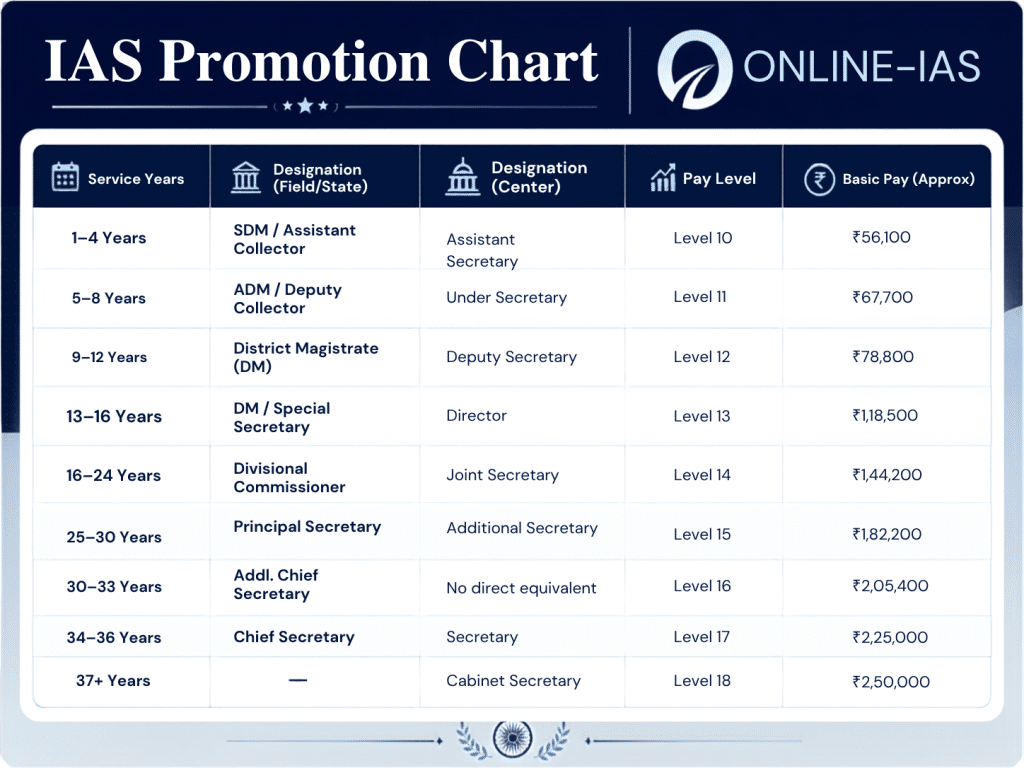
Each level connects to a pay grade from Level 10 to Level 18. These levels show how senior an officer is and what kind of work they do.
| Service Years | Designation (Field/State) | Designation (Center) | Pay Level | Basic Pay (Approx) |
|---|---|---|---|---|
| 1–4 Years | SDM / Assistant Collector | Assistant Secretary | Level 10 | ₹56,100 |
| 5–8 Years | ADM / Deputy Collector | Under Secretary | Level 11 | ₹67,700 |
| 9–12 Years | District Magistrate (DM) | Deputy Secretary | Level 12 | ₹78,800 |
| 13–16 Years | DM / Special Secretary | Director | Level 13 | ₹1,18,500 |
| 16–24 Years | Divisional Commissioner | Joint Secretary | Level 14 | ₹1,44,200 |
| 25–30 Years | Principal Secretary | Additional Secretary | Level 15 | ₹1,82,200 |
| 30–33 Years | Addl. Chief Secretary | No direct equivalent | Level 16 | ₹2,05,400 |
| 34–36 Years | Chief Secretary | Secretary | Level 17 | ₹2,25,000 |
| 37+ Years | — | Cabinet Secretary | Level 18 | ₹2,50,000 |
These numbers show only basic pay. IAS officers get pension benefits, Dearness Allowance, House Rent Allowance, and Transport Allowance. When you add these, the total salary becomes much higher.
IAS Ranks Explained: From SDM to Cabinet Secretary
Each job title has different duties. Moving from one rank to the next depends on years served and how well you perform.
1. Junior Time Scale (Entry-Level IAS Posts)
Officers start as Sub-Divisional Magistrates (SDM) or Assistant Collectors, and the work of an IAS officer includes handling a sub-district area, collecting revenue, and maintaining law and order.
If posted at the center, they work as Assistant Secretaries. This means they help with policy work and coordinate between different ministries.
2. Senior Time Scale & DM-Level Posts
Additional District Magistrates (ADM) and District Magistrates (DM) run entire districts. They oversee many departments and make sure government schemes reach people.
Deputy Secretaries at the center write policy papers and coordinate work between different government departments for specific areas.
3. Super Time Scale & Higher Administration
Divisional Commissioners look after multiple districts in one division. They focus on regional growth and check how the administration works.
Joint Secretaries at the central government create policies, watch over major programs, and represent their ministries in meetings with other departments.
4. Apex Positions in IAS
Chief Secretaries lead all administrative work in a state. They advise the Chief Minister and coordinate everything the state government does.
The Cabinet Secretary is India’s senior-most civil servant. This person heads all administrative work for the Union government and advises the Prime Minister on important governance matters.
How do IAS Promotions Happen?
Promotions in IAS happen based on years of service. Officers qualify for the next rank after working for a specific number of years.
The Department of Personnel and Training (DoPT) creates the rules that decide these timelines. These rules apply to all officers across the country.
Factors Affecting IAS Promotion Speed
- Annual Performance Appraisal Reports (APAR): Your yearly work reviews decide promotion and empanelment chances.
- Empanelment: DoPT creates a shortlist of officers for central jobs.
- Cadre Vacancies: Fewer senior positions in smaller states slow down promotions.
- Central Deputation: Working in central ministries increases your visibility and growth.
But here’s what actually happens on the ground. Your promotion speed depends heavily on which state cadre you belong to.
Officers in Bihar or Uttar Pradesh, which have many vacancies, often move faster. Those in smaller states like Manipur or Goa might wait years longer for the same promotion, even with excellent work records.
Central deputation changes the game. When you work in a central ministry, senior officials in Delhi see your work. This exposure matters when DoPT creates empanelment lists for Joint Secretary and higher posts.
State Cadre vs Central Deputation: Impact on IAS Career Growth
State field work teaches you how the administration actually runs. You deal with real people, solve ground-level problems, and manage crises.
Central deputation gives you something different. You learn how national policies get made, meet senior bureaucrats from across the country, and participate in decisions that affect millions.

As you become more senior, you get more choice about where you want to work. You can pick between state assignments and central government roles based on what suits your career goals.
Conclusion: The IAS Promotion Chart Maps Your 35-Year Path To Cabinet Secretary
The IAS promotion depends on fixed timelines, yearly performance reviews, and smart choices between state and central work. When you understand this system, you can set realistic goals for your career.
Aspirants preparing for UPSC get a clear picture of what lies ahead. Serving officers can plan their next moves better. Keep checking the DoPT guidelines because rules sometimes change.
Your IAS career is a marathon, not a sprint. Know the route, pace yourself right, and you’ll reach your destination.
FAQs
Promotions happen based on fixed years of service set by DoPT, combined with yearly performance reviews, available vacancies in your cadre, and empanelment for central positions.
Most IAS officers become District Magistrates after 9 to 12 years, but the exact timing depends on how many vacancies exist and individual performance scores.
Officers move through Junior Time Scale, Senior Time Scale, Selection Grade, Super Time Scale, and Apex Scale. Each scale links to specific pay levels and service years.
IAS work has no fixed hours. District Magistrates handle law and order problems, natural disasters, and election duties. These situations need attention at any time, day or night.
The Cabinet Secretary holds the top rank in IAS. This person leads all administrative work for the Union government and advises the Prime Minister on governance issues.